Impacted Tooth
Impacted Tooth: Causes, Problems and Treatment Options
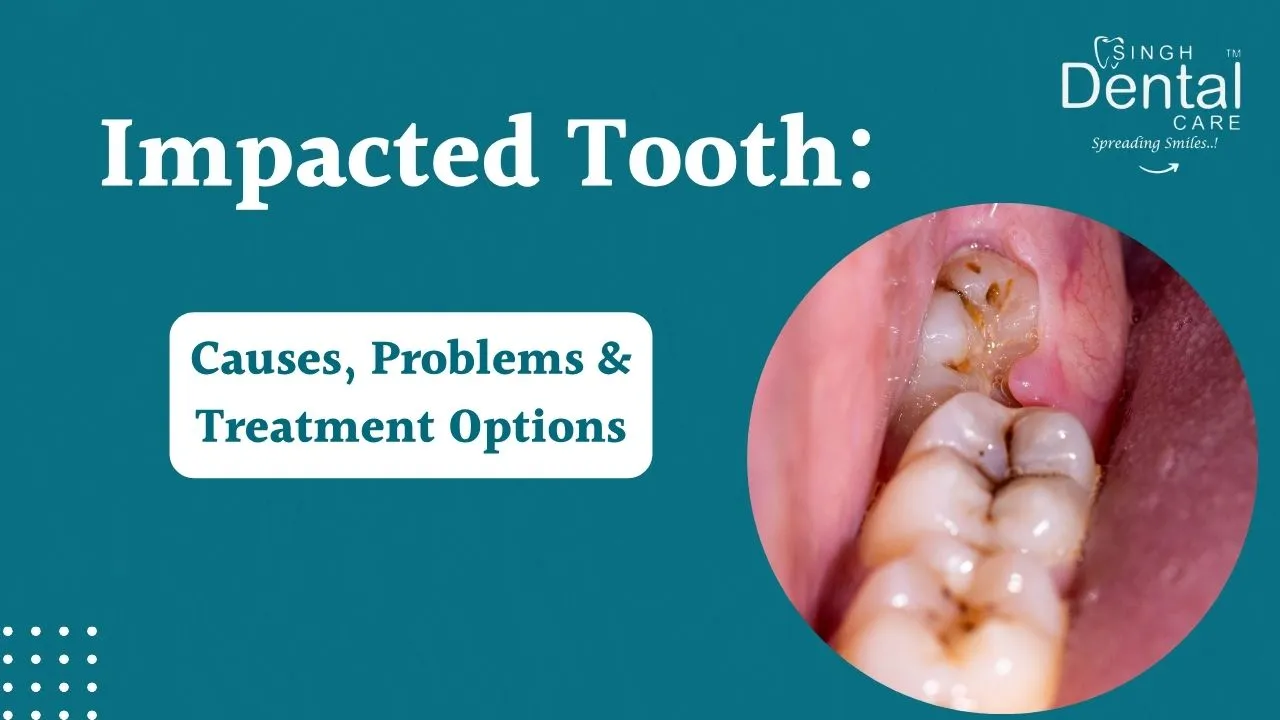
An impacted tooth is a tooth that fails to erupt normally into the mouth within the expected time. It may remain completely covered by bone and gum, or it may erupt only partially. Wisdom teeth (third molars) are the most commonly affected, but canines, premolars and other teeth can also become impacted.
What Is an Impacted Tooth?
A tooth may fail to erupt because of several factors, including:
Lack of space in the jaw
Crowding of teeth
Abnormal tooth position or angulation
Extra teeth blocking the eruption pathway
Cysts or other jaw lesions
Delayed loss of baby teeth
Certain developmental or genetic factors
In some cases, more than one factor may contribute to impaction.
What Problems Can an Impacted Tooth Cause?
Not every impacted tooth causes symptoms. However, leaving an impacted tooth without appropriate assessment may sometimes result in complications.
1. Infection
A partially erupted wisdom tooth can create a space where food debris and bacteria collect. This may cause pericoronitis, an infection and inflammation of the gum surrounding the tooth.
2. Pain and Swelling
Inflammation or infection may cause pain and gum swelling. In more severe cases, it can lead to facial swelling.
3. Tooth Decay
An impacted or partially erupted tooth is difficult to clean. Food trapping may increase the risk of decay in the impacted tooth or in the neighbouring tooth.
4. Damage to Nearby Teeth
An impacted tooth can sometimes press on an adjacent tooth. It may be associated with periodontal bone loss or root resorption of the neighbouring tooth.
5. Cyst or Other Pathology
Some impacted teeth may be associated with an odontogenic cyst or other jaw pathology. Although uncommon, these conditions may need further investigation and treatment.
6. Difficulty Opening the Mouth
Infection around a lower wisdom tooth can sometimes cause painful restriction of mouth opening, particularly when inflammation spreads into the surrounding tissues.
How Is an Impacted Tooth Diagnosed?
Diagnosis begins with a detailed clinical examination. Your dentist or Oral & Maxillofacial Surgeon may assess:
The position of the tooth
Gum condition
Presence of pain or infection
Adjacent teeth
Mouth opening
Signs of swelling or pathology
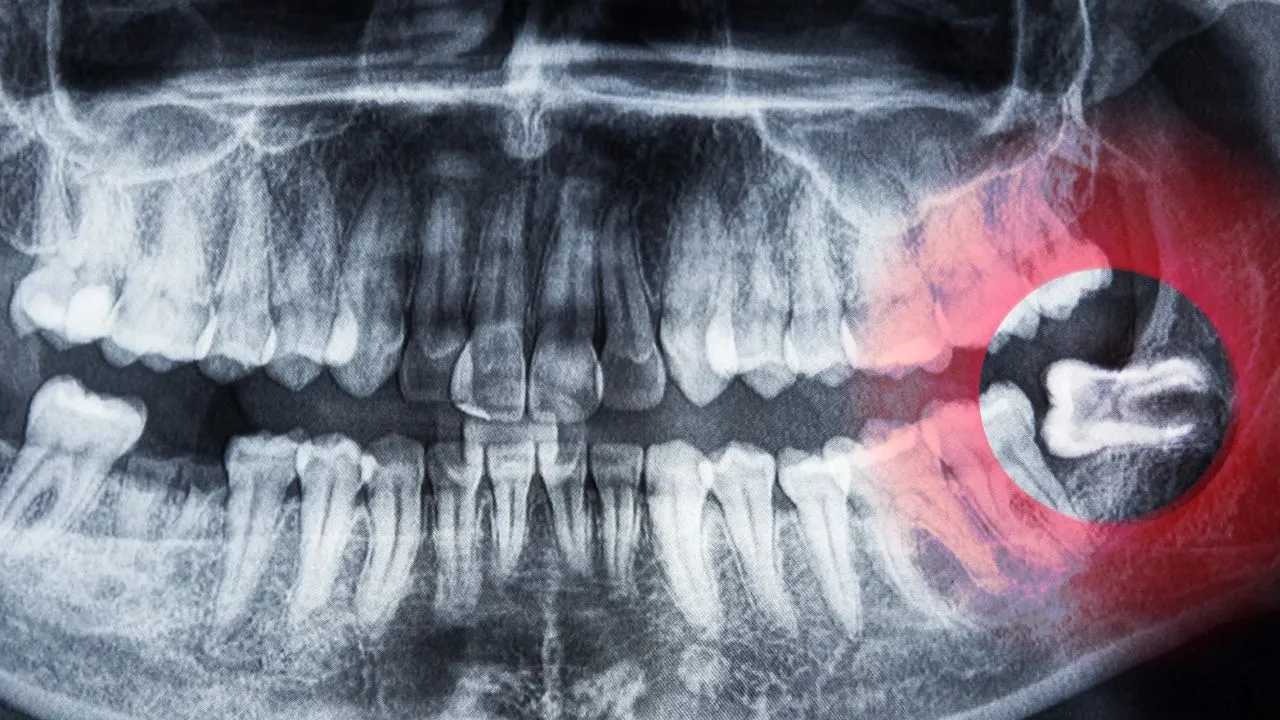
Dental X-ray
A panoramic or other dental X-ray helps determine the position and angulation of the impacted tooth and its relationship to surrounding structures.
CBCT Scan for an Impacted Tooth
In selected cases, a CBCT (Cone Beam Computed Tomography) scan may be recommended for a detailed three-dimensional assessment. It is particularly useful when an impacted tooth is close to important anatomical structures such as the inferior alveolar nerve, maxillary sinus or adjacent tooth roots.
What Are the Treatment Options for an Impacted Tooth?
Treatment depends on the type and position of the impacted tooth, symptoms, age, surrounding structures and the presence of pathology.

1. Observation
If an impacted tooth is completely symptom-free and there is no significant associated disease or damage, your dentist or surgeon may recommend periodic monitoring. Regular clinical and radiographic review can help detect changes early.
2. Surgical Removal
Removal may be considered when an impacted tooth is associated with:
Recurrent infection
Persistent pain
Tooth decay
Periodontal damage
Damage to neighbouring teeth
Cyst or other pathology
Other clinically significant complications
The surgical approach depends on the tooth's position and its relationship with surrounding anatomical structures.
3. Save and Align the Tooth
An impacted canine, particularly in a younger patient, may sometimes be preserved rather than removed. A common approach is surgical exposure of the tooth, followed by orthodontic treatment to gradually guide it into its correct position.
Treatment Options at a Glance
Place this right after the three treatment options, as a quick summary.
Observation: Used when the tooth is symptom-free and there is no significant disease or damage. It involves periodic clinical and radiographic review.
Surgical removal: Considered for infection, pain, decay, periodontal damage, damage to neighbouring teeth, cyst or other complications. The approach depends on the tooth's position and nearby anatomy.
Save and align: Used mainly for an impacted canine, particularly in a younger patient. It involves surgical exposure plus orthodontic treatment.
Don't Wait Until It Hurts: When to See a Specialist
An impacted tooth may remain unnoticed for a long time. The absence of pain does not always mean the absence of a problem.
An evaluation can help decide whether treatment or monitoring is appropriate if you have:
An unerupted tooth
Recurrent gum swelling
Pain around a wisdom tooth
Difficulty opening your mouth
Unexplained swelling
Early Evaluation = Early Diagnosis + Appropriate Treatment
Pain • Swelling • Recurrent Infection • Unerupted Tooth?
Consult a Dentist or Oral & Maxillofacial Surgeon for a clinical and radiographic evaluation and an individualized treatment plan. Book an Appointment
"This article is for educational purposes and does not replace a clinical examination."
Frequently Asked Questions
What is an impacted tooth?
Which teeth are most commonly impacted?
What causes a tooth to become impacted?
Does an impacted tooth always cause pain?
What is pericoronitis?
How is an impacted tooth diagnosed?
When is a CBCT scan needed?
Does every impacted tooth need to be removed?
Can an impacted tooth be saved?
When should I see a dentist or Oral & Maxillofacial Surgeon?
Dr. Bikramjeet Singh
BDS & Fellowship in ImplantologyChief Dental Surgeon & Implantologist • Singh Dental Care
This article has been authored and clinically verified by licensed dental professionals at Singh Dental Care to ensure evidence-based, safe, and accurate oral healthcare guidance.