Root Canal Treatment (RCT)
Root Canal Treatment (RCT): What Happens and What to Expect
Say “root canal” in a room full of people and watch the faces. Everybody knows somebody who had a terrible experience once, and the story only gets worse each time it’s told. The truth is much less dramatic. For most people, RCT is what finally makes the toothache stop.
What Is Root Canal Treatment (RCT)?
Every tooth has a soft centre called the pulp, packed with nerves and tiny blood vessels. It runs down into the roots through narrow tunnels, and those tunnels are the root canals.
Now imagine bacteria getting in. A deep cavity does it, so does a crack, an old filling that has started leaking, or a hard knock to the tooth. The pulp swells up, gets infected, and that’s the pain you feel. If nobody deals with it, the infection can push out through the tip of the root into the bone, and that’s how you end up with an abscess and a swollen face.
Healthy tooth, infected tooth and tooth after root canal treatment with crown
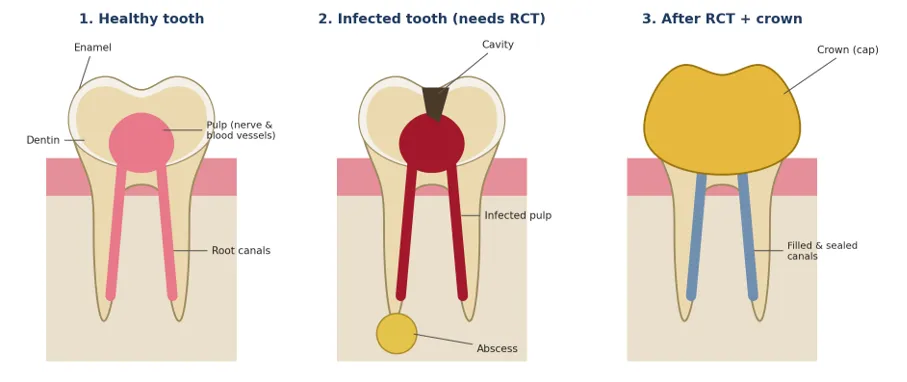
Figure 1: A healthy tooth, an infected tooth, and a tooth after root canal treatment with a crown (illustration)
RCT cleans out all of that. The dentist takes out the infected pulp, washes and disinfects the canals, and then packs and seals them so nothing can get back in. The tooth stays right where it is and goes on chewing. Honestly, that’s the main reason to do it.
Who Needs a Root Canal? Signs and Symptoms
Only a dentist can say for sure, usually after an X-ray. Still, there are some signs worth taking seriously:
A toothache that gets worse when you bite down (the classic one)
Sensitivity to hot or cold drinks that lingers well after you’ve finished your tea
Pain that wakes you at night
A tooth that has gone darker than the ones next to it
Sore, puffy gums around one tooth
A small bump on the gum that looks like a pimple
A deep cavity, a cracked tooth or a knock from an accident that can damage the nerve
Can a Tooth Need a Root Canal Even If It Doesn’t Hurt?
Here’s the tricky part, though. A tooth with a dead nerve can stop hurting altogether. You might assume it got better. It didn’t. Often the problem only shows up on an X-ray when you’ve gone in for something else, so don’t take a quiet tooth as good news without checking.
Single-Sitting vs Multiple-Sitting RCT: What’s the Difference?
Neither one is better in general. The choice depends on your X-ray and how complicated the tooth is. So if your friend finished in a single visit and you need three, that doesn’t mean something is wrong.
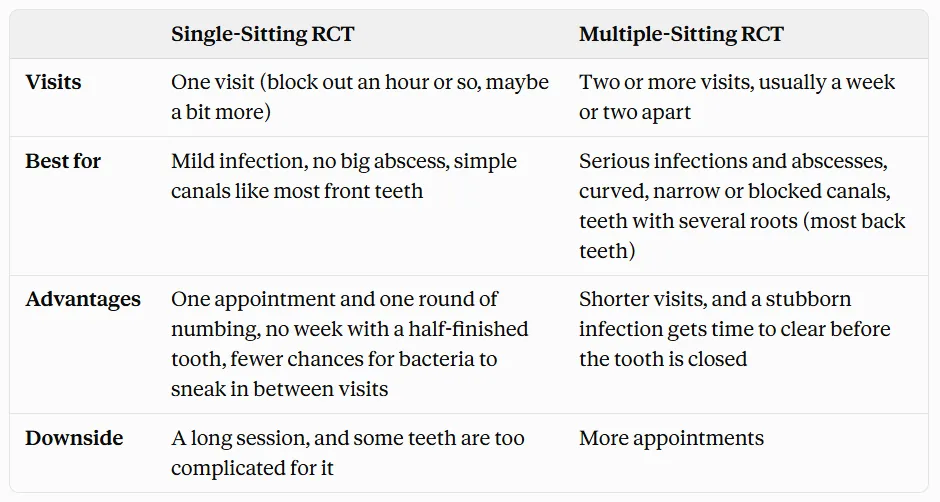
Single-Sitting RCT
This is the whole treatment in one visit. Block out an hour or so, maybe a bit more.
It works best when the infection is mild, there’s no big abscess, and the tooth has simple canals, like most front teeth. You get one appointment and one round of numbing, with no walking around for a week with a half-finished tooth. Bacteria also have fewer chances to sneak in between visits.
The downside? You have to sit through a long session, and some teeth are just too complicated for it.
Multiple-Sitting RCT
With this approach the work is split over two or more visits, usually a week or two apart. On the first visit the dentist cleans the canals and puts a medicine inside the tooth to calm the infection down. On the next one, when things have settled, the canals are filled and sealed.
Dentists go this way for serious infections and abscesses, for curved, narrow or blocked canals, and for teeth with several roots, which is most back teeth. The visits are shorter, and a stubborn infection gets time to clear before the tooth is closed.
Single-sitting versus multiple-sitting root canal treatment
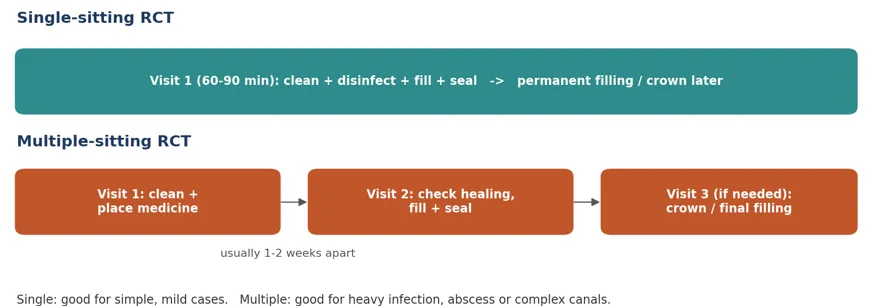
Figure 2: Single-sitting versus multiple-sitting RCT (illustration)
Root Canal Procedure: Step by Step
Knowing what’s coming takes a lot of the fear out of it. This is the usual order:
First the dentist examines the tooth and takes an X-ray, which shows the roots and how far the infection has spread.
Next comes the local anaesthetic. The injection stings a little, and after that you’ll feel pressure but no pain in the tooth.
A thin rubber sheet, the dental dam, goes around the tooth to keep it clean and dry.
The dentist drills a small opening in the top of the tooth to get to the pulp chamber.
With very fine instruments and a rinsing solution, the infected pulp is removed and the canals are cleaned out and shaped.
The empty canals are filled with gutta-percha, a rubbery material, and sealed.
The opening is closed with a temporary or permanent filling.
Finally, a crown. A tooth that has had a root canal is weaker than before, especially at the back of the mouth, so a crown is normally recommended.
Main stages of a root canal treatment
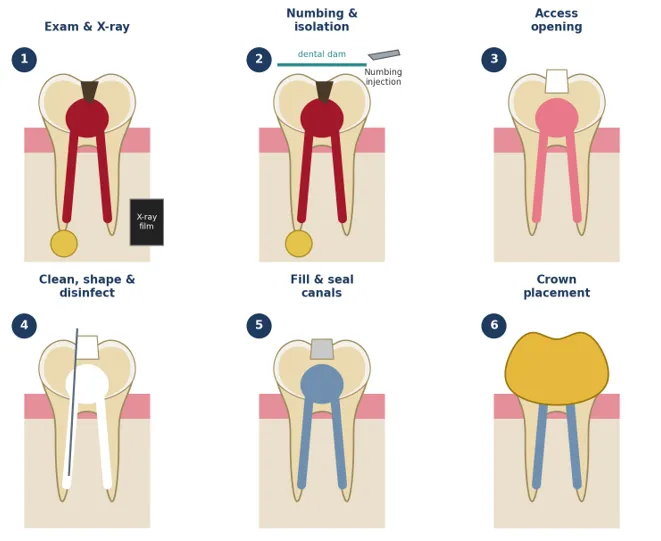
Figure 3: Main stages of a root canal treatment (illustration)
Recovery After a Root Canal: What to Expect
Most people are back to their routine the same day or the next morning.
First Few Hours and Days
Numbness sticks around for a few hours, so wait to eat until it’s gone. People bite their cheeks or tongues at this stage all the time without realizing. Once the feeling comes back, expect the tooth to be sore for a few days, mostly when you bite down. That’s completely normal. If it bothers you, ask your dentist which painkiller to take.
Care Until the Final Filling or Crown
Until the final filling or crown is done, chew on the other side and stay away from hard or sticky food. Keep brushing and flossing as usual, just with a lighter hand around that tooth.
Why You Shouldn’t Skip the Crown
If there’s one thing I’d push, it’s getting the crown done on time. This is the step people skip, because the pain is gone and life gets in the way. But a weak tooth with no crown can crack, and then the whole treatment has been wasted.
When to Call Your Dentist
Call your dentist if you get strong pain, swelling or a fever, or if your bite suddenly feels off.
Risks and Complications of Root Canal Treatment
RCT works well most of the time, but it’s not perfect, and you should know that before you start. The possible problems are:
The infection can return, for instance if a tiny canal was missed or the seal slowly leaks.
The tooth can crack, mostly when it has no crown.
You might get a flare-up of pain or swelling between visits.
On rare occasions a fine instrument snaps inside a canal, or someone reacts to a medicine or material.
When a treated tooth does fail, it can often be redone or repaired with a small surgery rather than pulled. A skilled dentist and a crown fitted on time are the best protection you have.
Key Takeaways
RCT removes the infected pulp, cleans and seals the canals, and keeps your natural tooth.
A tooth that has stopped hurting can still be infected, so get it checked.
Single-sitting suits mild infections and simple canals. Multiple-sitting suits serious infections and complicated teeth.
The procedure is done under local anaesthetic, with soreness for a few days afterwards being normal.
Get the crown done on time, because a weak tooth without one can crack
Final Thoughts
A root canal sounds worse than it is. It stops the pain, gets rid of the infection and lets you keep your own tooth. If anything in this article sounds like what you’re feeling, book a dentist visit now rather than waiting. The earlier a problem is caught, the easier the fix.
Disclaimer: This article is general information and doesn’t replace advice from your dentist. The illustrations are simplified diagrams.
Frequently Asked Questions
Does a root canal hurt?
How long does a root canal tooth last?
Do I really need a crown after a root canal?
Can I go to work after a root canal?
What happens if I ignore a root canal problem?
Is there an alternative to a root canal?
Is a root canal safe during pregnancy?
Can I avoid needing a root canal?
What is root canal treatment (RCT)?
What are the signs that I need a root canal?
Can a tooth need a root canal even if it doesn’t hurt?
What is the difference between single-sitting and multiple-sitting RCT?
What are the steps of a root canal procedure?
What should I do after a root canal?
When should I call my dentist after RCT?
Can a root canal fail?
Why is a crown needed after a root canal?
Dr. Smriti Heera
BDS-RCT ExpertRCT Expert • Singh Dental Care
This article has been authored and clinically verified by licensed dental professionals at Singh Dental Care to ensure evidence-based, safe, and accurate oral healthcare guidance.