Dental Crowns
Why Do Damaged Teeth Need Crowns? A Prosthodontist Explains
It was a busy afternoon at the clinic when a patient walked in with a simple question: "Doctor, my tooth is still there. Why do I need a crown?"
It's a question dentists hear quite often, and it is understandable. When a tooth is damaged, patients naturally wonder why it cannot simply be filled, especially if a significant portion of the tooth remains.
But restoring a damaged tooth is not always about simply "filling the hole." Sometimes, the tooth needs something more. That is where a dental crown can play an important role. Let's understand why.
Quick Answer: A dental crown is a custom-made restoration that covers a damaged or weakened tooth to restore its strength, shape, function and appearance. It is considered when a tooth has lost a significant amount of its structure due to decay, fracture, wear or a previous restoration. Not every damaged tooth needs a crown. If enough healthy tooth structure remains, a filling may be appropriate.
What Is a Dental Crown?
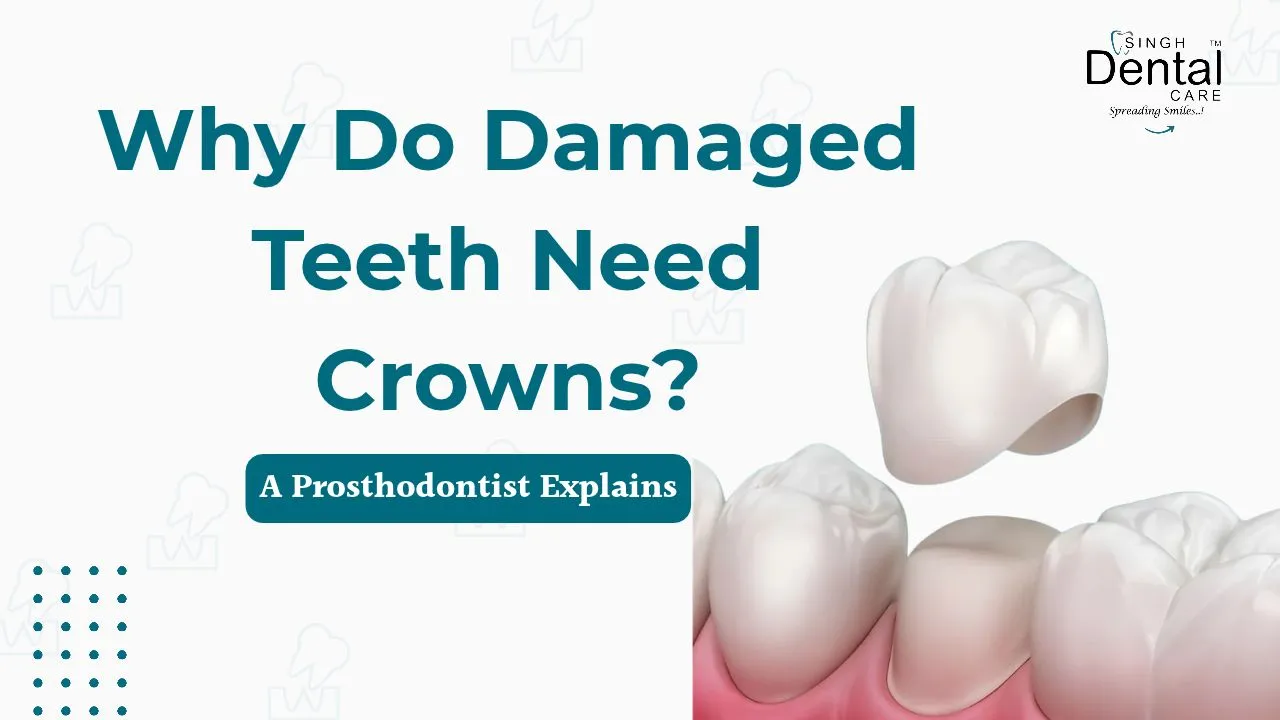
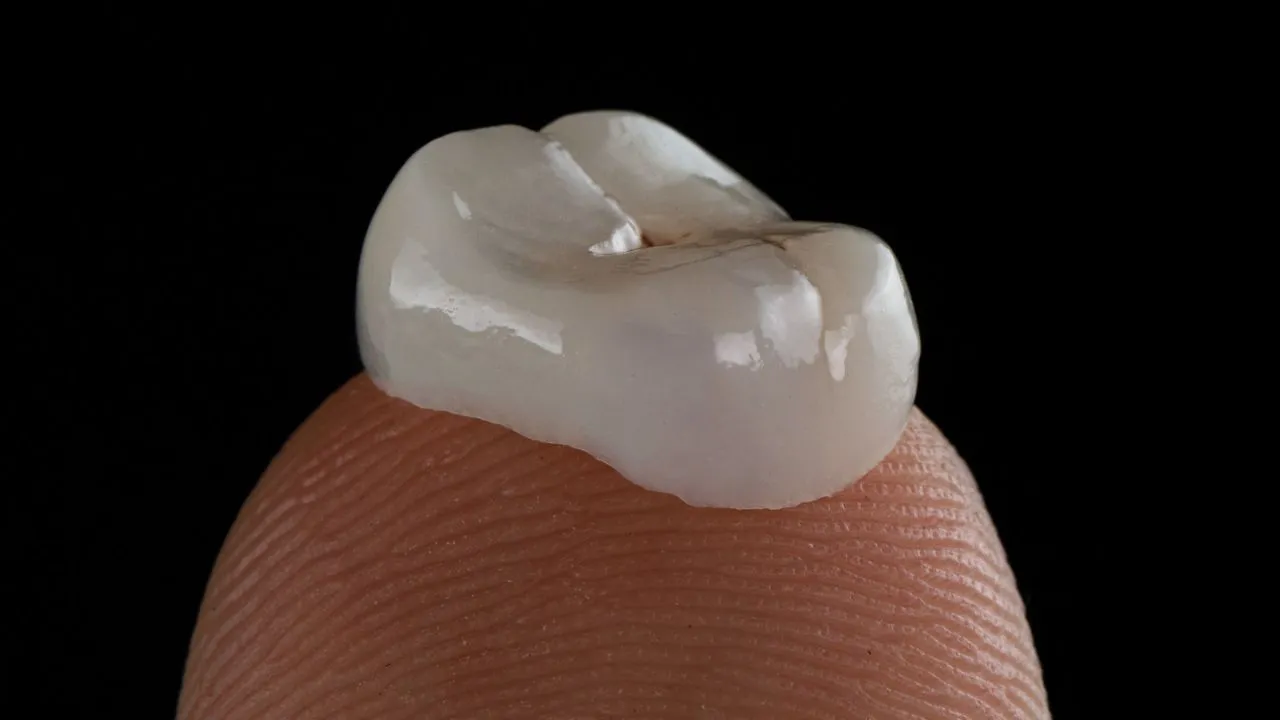
A dental crown is a custom-made restoration that covers the visible portion of a damaged or weakened tooth. Think of it as a protective covering designed to restore the tooth's:
Strength
Shape
Function
Appearance
Unlike a filling, which primarily replaces missing tooth structure, a crown surrounds and protects the remaining tooth when it has lost a significant amount of its natural structure.
The goal is not simply to make the tooth "look complete." The goal is to help the tooth function safely again.
Why Does a Damaged Tooth Need a Crown?
Imagine a tooth that has lost a large amount of its structure due to decay, fracture, wear or a previous restoration. Although the tooth may still be present, it may no longer have the same strength it originally had.
Every time you bite or chew, forces are transferred through the tooth. A weakened tooth may be more vulnerable to further fracture. A crown can help distribute these forces over the remaining tooth structure and provide additional protection. This is particularly important when a large portion of the tooth has already been lost.
Crown vs Filling: Which Does Your Tooth Need?
"But Doctor, can't I just get a filling?"
Sometimes, yes. Not every damaged tooth needs a crown. If enough healthy tooth structure remains and the damage is limited, a filling or another conservative restoration may be appropriate. But when the damage is extensive, simply replacing the missing portion may not provide adequate protection.
What Your Dentist or Prosthodontist Considers
Before deciding, your dentist or prosthodontist considers several factors:
How much tooth structure is remaining?
Where is the tooth located?
How much biting force does it receive?
Is the tooth cracked or fractured?
Has it undergone root canal treatment?
What is the condition of the surrounding gums and bone?
What are the patient's functional and aesthetic requirements?
So the question isn't simply: "Do I need a crown?"
The better question is: "What type of restoration will protect my tooth while preserving as much healthy tooth structure as possible?"
Do Root Canal-Treated Teeth Need Crowns?
This is one of the most common situations where crowns are considered. A tooth that has undergone root canal treatment may have already lost significant tooth structure because of decay, previous restorations, fracture or the access required for treatment. Such teeth may require additional protection against fracture, depending on the amount and location of remaining tooth structure.
However, this does not mean that every root canal-treated tooth automatically requires the same type of crown. The restoration should be planned according to the individual tooth and the amount of remaining healthy structure.
Do Crowns Improve Function and Appearance?
Crowns are not just about strength. A crown also plays an important role in restoring function and appearance. A badly damaged tooth may affect:
Chewing efficiency
Bite and occlusion
Speech in certain situations
Smile aesthetics
Patient confidence
Which Materials Are Used for Dental Crowns?
Modern dental materials allow crowns to be designed to closely reproduce the natural appearance of teeth. Depending on the clinical situation, materials such as zirconia, lithium disilicate and porcelain-fused-to-metal may be considered. The choice depends on factors such as tooth position, functional demands, aesthetics, available tooth structure and the individual patient's needs.
Does a Crown Require Removing a Lot of Tooth?
This is another common concern. Traditionally, preparing a tooth for a crown involved removing a certain amount of tooth structure to create space for the restoration. Today, modern restorative concepts emphasize preserving healthy tooth structure wherever possible.
The amount of preparation depends on the type of crown, the material being used, the existing tooth structure and the clinical requirements. A well-planned crown should complement the remaining tooth rather than unnecessarily sacrifice healthy structure.
What Happens If a Damaged Tooth Is Left Unprotected?
Not every damaged tooth will necessarily fail. But if a structurally compromised tooth is subjected to repeated chewing forces, the damage can sometimes progress.
A small crack can become larger.
A fractured cusp can break further.
A heavily restored tooth may become increasingly difficult to restore.
And in some situations, a tooth that could initially have been saved may eventually require more extensive treatment. That is why timely evaluation matters.
Key Takeaway: Choose the Right Restoration for the Right Tooth
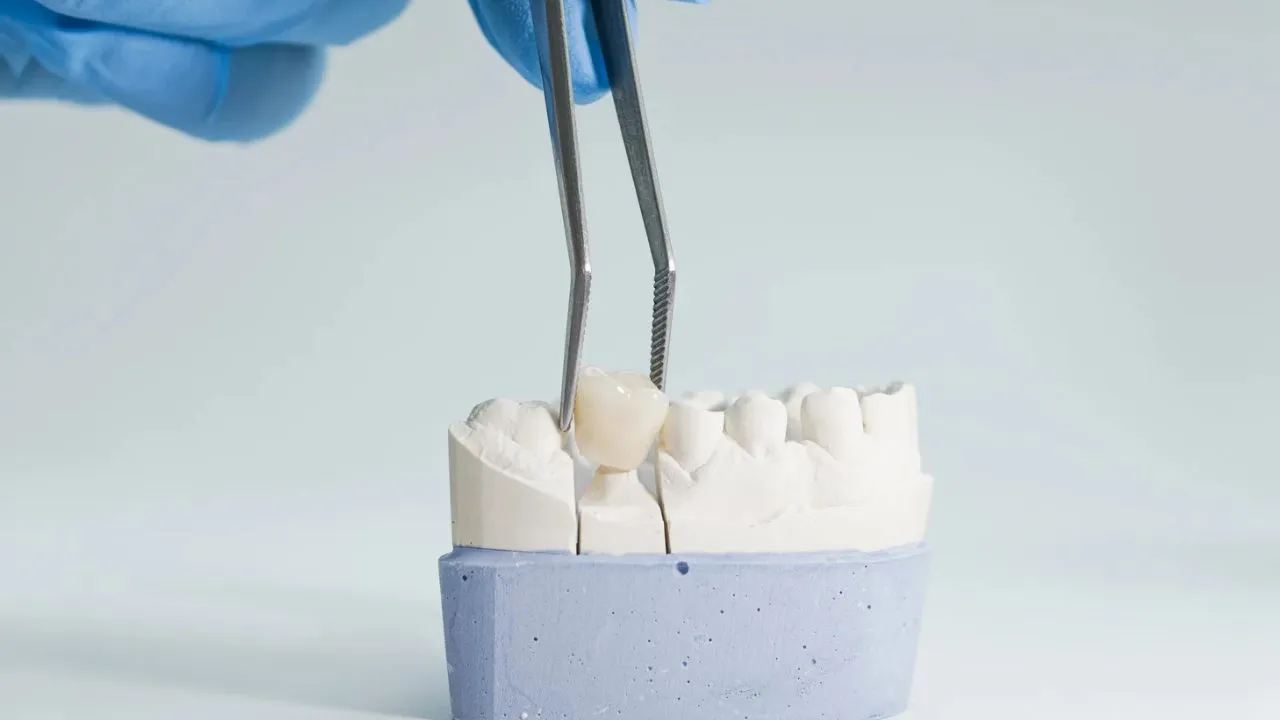
A crown is not simply a "cap" placed over a tooth. It is a prosthetic restoration designed to restore and protect a compromised tooth while helping it return to comfortable, functional use.
But a crown is not automatically the answer for every damaged tooth. The most important step is understanding how much healthy tooth structure remains and what the tooth actually needs.
Because good dentistry is not about placing the most extensive restoration. It is about choosing the right restoration for the right tooth at the right time.
So, if you have a damaged, heavily filled, fractured or root canal-treated tooth, don't wait for it to break further. Let your dentist or prosthodontist evaluate it, and understand what your tooth needs to stay functional for years to come.
Because saving a tooth is not just about keeping it in your mouth. It is about restoring it so that you can use it confidently again.
Frequently Asked Questions
Does every damaged tooth need a crown?
Can a crown look like a natural tooth?
How long does a crown last?
Can a crowned tooth develop decay?
Is a crown painful?
Do root canal-treated teeth always need a crown?
Does getting a crown mean removing a lot of healthy tooth?
Who decides whether I need a crown?
Dr Sahiba
MDS ProsthodonticsCrown, Bridge, Veneers, and dencher Specialist • Singh Dental Care
This article has been authored and clinically verified by licensed dental professionals at Singh Dental Care to ensure evidence-based, safe, and accurate oral healthcare guidance.