Disease & Condition Directory
Aligners
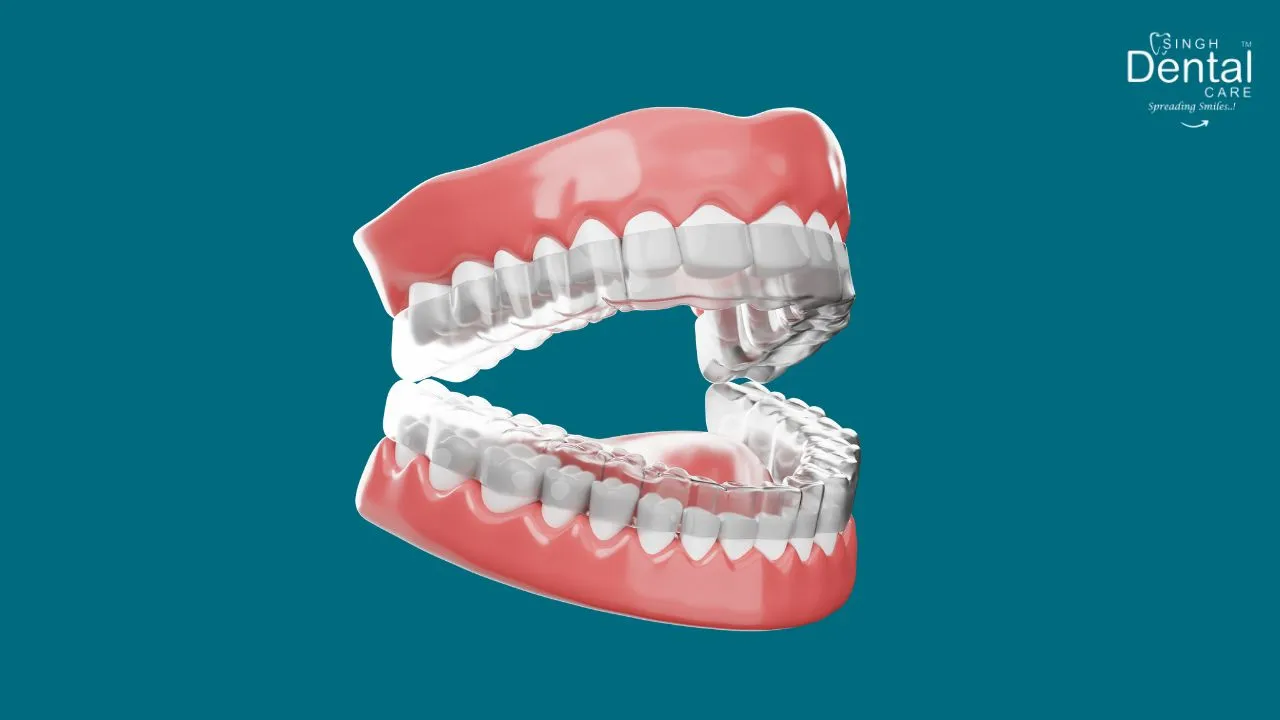
Clear Aligners
Understanding Aligners
What Are Clear Aligners?
Clear aligners are a modern orthodontic treatment used to straighten teeth and correct bite problems using a series of custom-made, transparent, removable trays. Each aligner gradually moves the teeth into their desired position without the need for traditional metal braces.
Made from smooth, medical-grade plastic, clear aligners are comfortable, discreet and designed to fit snugly over your teeth. They offer an effective and aesthetically pleasing solution for both teenagers and adults.
At Singh Dental Care, we provide personalized clear aligner treatment plans using advanced digital technology to help you achieve a straighter, healthier and more confident smile.
Why Might You Need Clear Aligners?
Crooked or crowded teeth
Gaps between teeth
Mild to moderate bite problems
Overbite
Underbite
Crossbite
Open bite
Relapse after previous orthodontic treatment
Clear aligners improve both the appearance of your smile and the function of your bite.
Signs That You May Be a Candidate for Clear Aligners
Want straighter teeth without visible metal braces
Have healthy teeth and gums
Have mild to moderate orthodontic problems
Are committed to wearing aligners for the recommended time each day
Prefer a removable orthodontic appliance
A detailed orthodontic evaluation is necessary to determine whether clear aligners are suitable for your case.
Conditions Treated with Clear Aligners
Crowded Teeth :- Teeth overlap due to insufficient space in the jaw.
Spacing or Gaps :- Excess space exists between two or more teeth.
Overbite :- Upper front teeth excessively overlap the lower front teeth.
Underbite :- Lower teeth protrude in front of the upper teeth.
Crossbite :- One or more upper teeth bite inside the lower teeth.
Open Bite :- Upper and lower teeth do not touch when the mouth is closed.
Mild Relapse :- Teeth that have shifted after previous orthodontic treatment.
How Does Clear Aligner Treatment Work?
Step 1: Consultation and Smile Assessment :- The dentist or orthodontist examines your teeth, bite, and oral health to determine if clear aligners are the right treatment.
Step 2: Digital Scanning and Records :- Digital scans, photographs, and X-rays are taken to create a precise 3D model of your teeth.
Step 3: Personalized Treatment Planning :- Advanced software is used to digitally plan the movement of each tooth and show the expected treatment outcome
Step 4: Fabrication of Custom Aligners :- A series of custom-made aligners is manufactured specifically for your treatment.
Step 5: Wearing the Aligners :- Each set of aligners is typically worn for 1–2 weeks before progressing to the next set.
For optimal results, aligners should be worn for 20–22 hours per day, removing them only for eating, drinking (except water), brushing and flossing.
Step 6: Regular Progress Reviews :- Routine follow-up visits ensure your teeth are moving as planned and allow adjustments if needed
Step 7: Retainers :- After treatment is complete, retainers are provided to maintain your new smile and prevent teeth from shifting back.
Is Clear Aligner Treatment Painful?
Clear aligners are generally more comfortable than traditional braces.
You may experience mild pressure or soreness for a day or two when starting a new set of aligners. This is a normal sign that your teeth are moving.
Most patients continue their normal daily activities without interruption.
Benefits of Clear Aligners
Nearly Invisible :- Transparent aligners offer a discreet way to straighten your teeth.
Removable :- You can remove the aligners while eating, drinking, brushing and flossing.
Comfortable :- Smooth plastic trays reduce irritation compared to metal brackets and wires.
Easier Oral Hygiene :- Because aligners are removable, maintaining oral hygiene is simpler than with fixed braces.
Fewer Dietary Restrictions :- Unlike traditional braces, there are no restrictions on foods because aligners are removed during meals.
Predictable Results :- Digital treatment planning provides a clear roadmap for tooth movement and expected outcomes.
Improved Confidence :- A straighter smile enhances facial aesthetics, oral function and self-confidence.
Recovery and Aftercare :- To achieve the best results:-
Wear aligners for 20–22 hours daily.
Remove aligners before eating or drinking anything except water.
Brush and floss before reinserting aligners.
Clean aligners daily using a soft toothbrush and lukewarm water or the recommended cleaning solution.
Store aligners in their protective case when not in use.
Attend scheduled follow-up appointments.
Wear retainers as instructed after treatment.
Possible Risks and Limitations
Temporary discomfort when changing aligners
Speech changes during the first few days
Slower progress if aligners are not worn as instructed
Mild irritation of the tongue or cheeks
Not suitable for all complex orthodontic cases
Additional refinement aligners may occasionally be required
Following your treatment plan carefully helps achieve the best results.
How Long Does Clear Aligner Treatment Take?
Treatment duration depends on the complexity of the case.
Typical treatment times include:
Mild cases: 4–6 months
Moderate cases: 6–12 months
Complex cases: 12–24 months or longer
FAQ
Q)Are clear aligners as effective as braces?
A)For many mild to moderate orthodontic problems, clear aligners are highly effective. More complex cases may require traditional braces or a combination of treatments.
Q)How many hours should I wear my aligners?
A)Aligners should be worn for 20–22 hours per day for optimal results.
Q)Can I eat while wearing my aligners?
A)No. Aligners should be removed before eating or drinking anything other than plain water.
Q)Will aligners affect my speech?
A)Some patients notice a slight lisp during the first few days, but speech usually returns to normal quickly.
Q)How do I clean my aligners?
A)Clean them daily with a soft toothbrush and lukewarm water or a dentist-recommended aligner cleaner. Avoid using hot water, as it can warp the plastic.
Q)Will I need retainers after treatment?
A)Yes. Retainers are essential to maintain your new tooth position and reduce the risk of relapse.
Dr. Bikramjeet Singh
BDS & Fellowship in ImplantologyChief Dental Surgeon & Implantologist • Singh Dental Care
This clinical condition overview has been authored and verified by dental specialists at Singh Dental Care to ensure evidence-based, safe, and accurate oral healthcare guidance.
Seek Professional Advice
Our specialists at Singh Dental Care are equipped with advanced technology to diagnose and treat aligners with precision.
Disclaimer: The information provided above is for educational purposes only and should not be considered as medical advice. Please consult with a qualified dental professional for diagnosis and treatment options.