Disease & Condition Directory
Bleaching (Teeth Whitening)
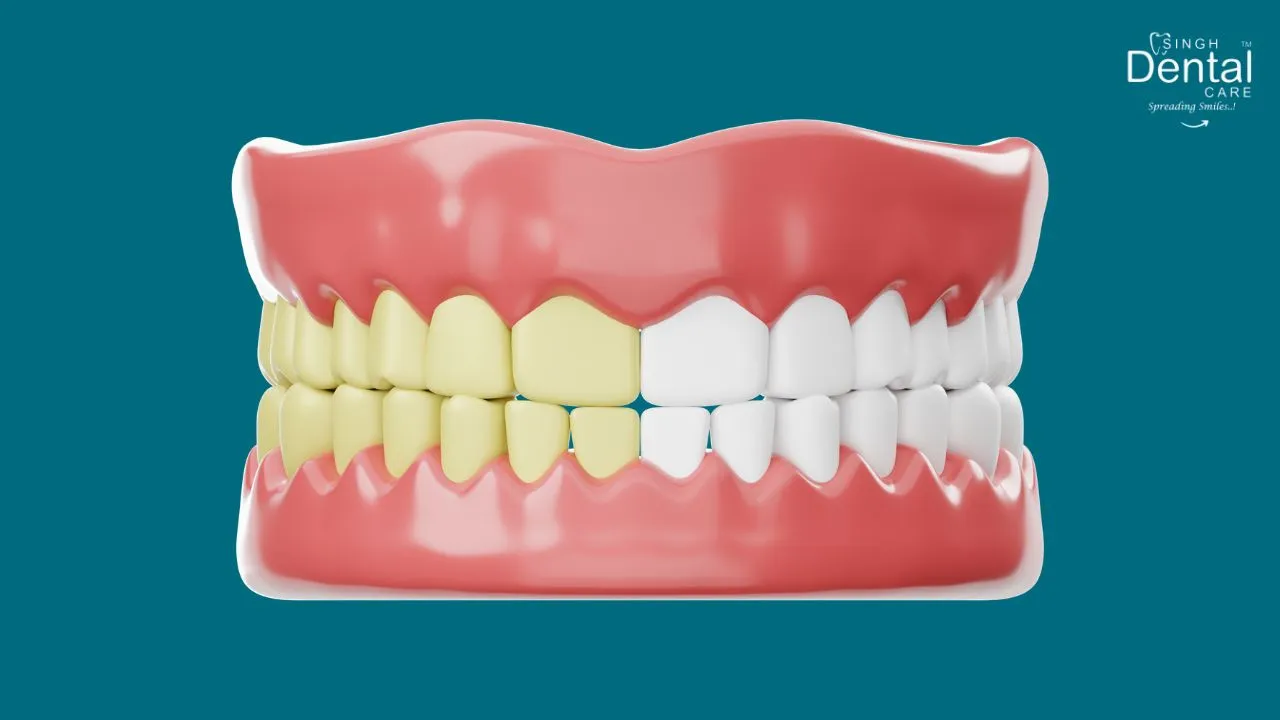
Teeth Whitening
Understanding Bleaching (Teeth Whitening)
What Is Teeth Whitening (Dental Bleaching)?
Teeth whitening, also known as dental bleaching, is a cosmetic dental procedure that safely lightens the natural color of your teeth by removing stains and discoloration. Professional teeth whitening uses clinically approved whitening agents to brighten your smile while protecting your teeth and gums.
Unlike over-the-counter whitening products, professional teeth whitening is customized to your needs and performed under the supervision of a dentist offering safer, faster and more predictable results.
At Singh Dental Care, we provide professional teeth whitening treatments to help you achieve a brighter more confident smile.
Why Might You Need Teeth Whitening?
Yellow or stained teeth
Discoloration caused by tea, coffee or soft drinks
Tobacco-related stains
Age-related tooth discoloration
Mild discoloration due to certain medications
A desire for a brighter smile before a wedding, interview or special occasion
Teeth whitening is ideal for individuals looking to improve the appearance of their smile without altering the natural tooth structure.
Signs That You May Be a Candidate for Teeth Whitening
Have healthy teeth and gums
Have yellow or mildly stained teeth
Want a brighter and more youthful smile
Do not have untreated cavities or active gum disease
Have realistic expectations regarding the outcome
A dental examination is recommended before whitening to determine whether the treatment is suitable for you.
Types of Teeth Whitening
In-Office Professional Whitening :- Performed by a dentist using professional-strength whitening agents. This provides fast, safe and noticeable results, often in a single visit.
Take-Home Whitening Kits :- Custom-made trays with professional whitening gel prescribed by your dentist for gradual whitening at home.
Internal Bleaching :- Used to whiten discolored teeth that have undergone root canal treatment.
How Is Teeth Whitening Performed?
Step 1: Dental Examination :- The dentist examines your teeth and gums to ensure they are healthy enough for whitening. Any cavities or gum disease should be treated first.
Step 2: Professional Cleaning :- Scaling and polishing may be recommended to remove plaque and surface stains before whitening.
Step 3: Gum Protection :- A protective barrier is applied to the gums to shield them from the whitening gel.
Step 4: Whitening Gel Application :- A professional whitening gel is carefully applied to the tooth surfaces.
Step 5: Activation (If Required) :- Depending on the whitening system, a specialized LED or light source may be used to enhance the whitening process.
Step 6: Evaluation of Results :- The whitening gel is removed, and the results are assessed. Additional applications may be performed during the same appointment if appropriate.
Is Teeth Whitening Painful?
Teeth whitening is generally comfortable. Some patients may experience temporary tooth sensitivity or mild gum irritation after treatment. These effects are usually short-lived and resolve within a few days.
Benefits of Professional Teeth Whitening
Brighter Smile :- Effectively removes stains and lightens the natural tooth color.
Boosts Confidence :- A whiter smile can enhance self-esteem and appearance.
Quick Results :- Professional treatments often provide noticeable improvement in just one appointment.
Safe and Supervised :- Performed under the guidance of a qualified dentist to minimize risks.
Conservative Cosmetic Treatment :- Improves aesthetics without drilling or removing healthy tooth structure.
Recovery and Aftercareṣ
Avoid tea, coffee and colored beverages for at least 24–48 hours
Avoid smoking and tobacco products
Brush twice daily with fluoride toothpaste
Maintain excellent oral hygiene
Use a sensitivity toothpaste if recommended
Attend regular dental checkups and cleanings
Following these recommendations helps maintain your whitening results.
Possible Side Effects
Temporary side effects may include:
Tooth sensitivity
Mild gum irritation
Temporary discomfort when consuming hot or cold foods and drinks
These effects usually resolve within a few days.
How Long Do Whitening Results Last?
The longevity of whitening depends on:
Consumption of tea, coffee, and staining foods
Smoking habits
Oral hygiene practices
Regular professional dental cleanings
Many patients enjoy results for several months to a few years.
FAQ
Q)Is teeth whitening safe?
A)Yes,Professional teeth whitening is considered safe when performed under the supervision of a qualified dentist.
Q)Will whitening damage my teeth?
A)No,Professional whitening does not damage healthy enamel when used as directed.
Q)Does whitening work on crowns, veneers or fillings?
A)No,Whitening agents do not change the color of crowns, veneers, or tooth-colored fillings.
Q)How white will my teeth become?
A)Results vary depending on the original shade of your teeth and the type of discoloration.
Q)Can everyone undergo teeth whitening?
A)Not always, Whitening may not be suitable for pregnant women, individuals with untreated cavities or gum disease, or certain types of tooth discoloration. Your dentist will advise you accordingly.
Q)Can I repeat teeth whitening?
A)Yes, Touch-up treatments may be performed when recommended by your dentist, depending on your oral health and whitening goals.
Dr. Bikramjeet Singh
BDS & Fellowship in ImplantologyChief Dental Surgeon & Implantologist • Singh Dental Care
This clinical condition overview has been authored and verified by dental specialists at Singh Dental Care to ensure evidence-based, safe, and accurate oral healthcare guidance.
Seek Professional Advice
Our specialists at Singh Dental Care are equipped with advanced technology to diagnose and treat bleaching (teeth whitening) with precision.
Disclaimer: The information provided above is for educational purposes only and should not be considered as medical advice. Please consult with a qualified dental professional for diagnosis and treatment options.