Disease & Condition Directory
Braces
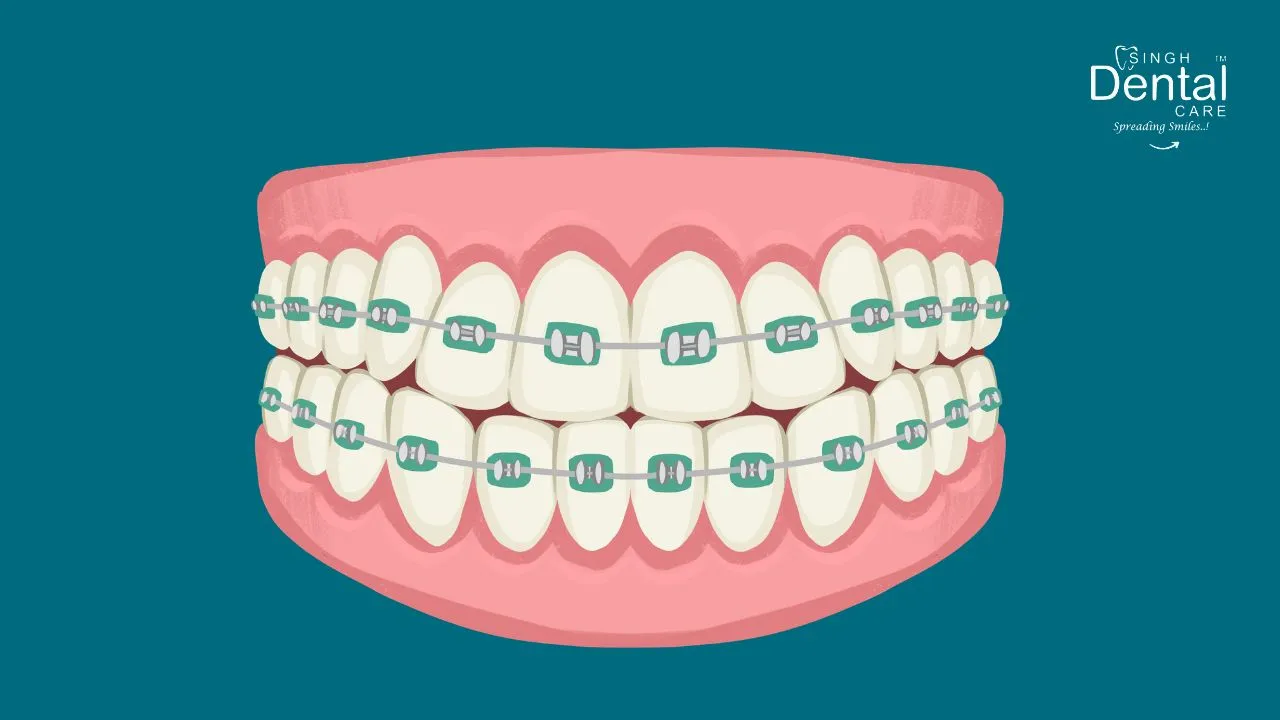
Orthodontic Braces
Understanding Braces
What Are Orthodontic Braces?
Orthodontic braces are fixed dental appliances used to straighten teeth, correct bite problems, and improve the alignment of the jaws. Braces work by applying gentle, continuous pressure to gradually move teeth into their ideal positions over time.
Besides improving the appearance of your smile, orthodontic treatment also enhances chewing, speech, oral hygiene and long-term dental health.
At Singh Dental Care, our orthodontist provide customized braces treatment for children, teenagers and adults using advanced techniques to achieve healthy, beautiful and long-lasting results.
Why Might You Need Orthodontic Braces?
Crooked teeth
Crowded teeth
Gaps between teeth
Overbite
Crossbite
Open bite
Rotated teeth
Jaw growth discrepancy
Difficulty chewing due to bite problems
Braces improve both dental function and smile aesthetics.
Signs That You May Be a Candidate for Braces
Have crowded/overlapping teeth
Have spaces between teeth
Experience uneven tooth wear
Have difficulty biting or chewing
Notice jaw discomfort due to bite problems
Want to improve the appearance of your smile
A comprehensive orthodontic evaluation will determine whether braces are the most suitable treatment for you.
Types of Orthodontic Braces
Metal Braces :- Most commonly used orthodontic treatment
Highly effective for simple and complex cases
Durable and cost-effective
Ceramic Braces :- Tooth-colored brackets for improved aesthetics
Less noticeable than metal braces
Suitable for older teenagers and adults
Self-Ligating Braces :- Use specialized clips instead of elastic bands
May reduce friction and simplify adjustments
Reduced treatment time
Often require fewer appointments
Lingual Braces :- Attached to the inner (tongue-side) surface of the teeth
Virtually invisible from the front
Suitable for selected patients
Conditions Treated with Braces
Crowded Teeth :- Teeth overlap because there is insufficient space.
Spacing Between Teeth :- Large or small gaps between teeth.
Overbite :- Upper front teeth excessively overlap the lower teeth.
Underbite :- Lower teeth extend in front of the upper teeth.
Crossbite :- Upper teeth bite inside the lower teeth.
Open Bite :- Upper and lower teeth do not meet properly when the mouth is closed.
Rotated Teeth :- Teeth that have twisted out of their normal position.
Jaw Alignment Problems :- Certain jaw discrepancies may be improved with orthodontic treatment, depending on the patient's age and condition.
How Are Orthodontic Braces Placed?
Step 1: Consultation and Orthodontic Assessment :- The orthodontist examines your teeth, bite, facial profile and jaw relationship.
Step 2: Diagnostic Records :- Digital X-rays, photographs and dental impressions or 3D scans are taken for treatment planning.
Step 3: Personalized Treatment Plan :- A customized plan is created to achieve optimal tooth alignment and bite correction.
Step 4: Braces Placement :- Brackets are bonded to the teeth and an orthodontic wire is placed to begin tooth movement.
Step 5: Regular Adjustments :- Periodic appointments are scheduled every 4–8 weeks to adjust the braces and monitor progress.
Step 6: Braces Removal :- Once treatment is complete, the braces are removed, and the teeth are professionally cleaned.
Step 7: Retainers :- Custom retainers are provided to maintain the new tooth positions and prevent relapse.
Is Braces Treatment Painful?
Braces placement itself is not painful.
You may experience mild pressure or soreness for a few days after the braces are placed or adjusted. This discomfort is temporary and indicates that the teeth are responding to treatment.
Most patients continue their normal daily activities without interruption.
Benefits of Orthodontic Braces
Straightens Teeth :- Improves tooth alignment for a healthier and more attractive smile.
Corrects Bite Problems :- Enhances chewing efficiency and jaw function.
Improves Oral Hygiene :- Properly aligned teeth are easier to clean, reducing the risk of cavities and gum disease.
Prevents Excessive Tooth Wear :- Correct bite alignment helps distribute chewing forces more evenly.
Improves Speech :- Certain bite problems affecting speech may improve after orthodontic treatment.
Enhances Self-Confidence :- A straight smile contributes to greater confidence and improved facial aesthetics.
Recovery and Aftercare
Brush after every meal using a soft-bristled toothbrush
Floss daily using orthodontic floss or floss threaders
Avoid hard, sticky, or chewy foods that may damage the braces
Wear orthodontic elastics as instructed if prescribed
Attend all adjustment appointments
Wear retainers after treatment is completed
Good oral hygiene is essential throughout orthodontic treatment.
Possible Risks and Limitations
Temporary discomfort after adjustments
Mouth ulcers during the initial adaptation period
Difficulty maintaining oral hygiene
White spot lesions if plaque accumulates
Bracket or wire breakage
Mild root shortening in rare cases
Relapse if retainers are not worn after treatment
Following your orthodontist's instructions helps minimize these risks.
How Long Does Braces Treatment Take?
Treatment duration depends on the complexity of the case.
Typical treatment times include:
Mild cases: 6–12 months
Moderate cases: 12–24 months
Complex cases: 24–36 months or longer
Your orthodontist will provide an individualized estimate based on your treatment needs.
FAQ
Q)What is the best age for braces?
A)Orthodontic treatment can be successful at almost any age. Children are often evaluated around 7 years of age, but many teenagers and adults also benefit from braces.
Q) Can adults wear braces?
A) Yes. Braces are an effective treatment option for adults with healthy teeth and gums.
Q) Will braces affect my speech?
A) Some patients notice slight speech changes initially, but most adapt within a few days.
Q) What foods should I avoid?
A) Avoid hard foods (such as nuts and ice), sticky foods (such as chewing gum and caramel), and foods that may damage brackets or wires.
Q) How often will I need appointments?
A) Most patients are reviewed every 4–8 weeks, depending on their treatment plan.
Q) Why are retainers necessary after braces?
A) Retainers help maintain the corrected tooth position and reduce the risk of teeth shifting back after treatment.
Dr. Bikramjeet Singh
BDS & Fellowship in ImplantologyChief Dental Surgeon & Implantologist • Singh Dental Care
This clinical condition overview has been authored and verified by dental specialists at Singh Dental Care to ensure evidence-based, safe, and accurate oral healthcare guidance.
Seek Professional Advice
Our specialists at Singh Dental Care are equipped with advanced technology to diagnose and treat braces with precision.
Disclaimer: The information provided above is for educational purposes only and should not be considered as medical advice. Please consult with a qualified dental professional for diagnosis and treatment options.