Disease & Condition Directory
Cracked Tooth Syndrome
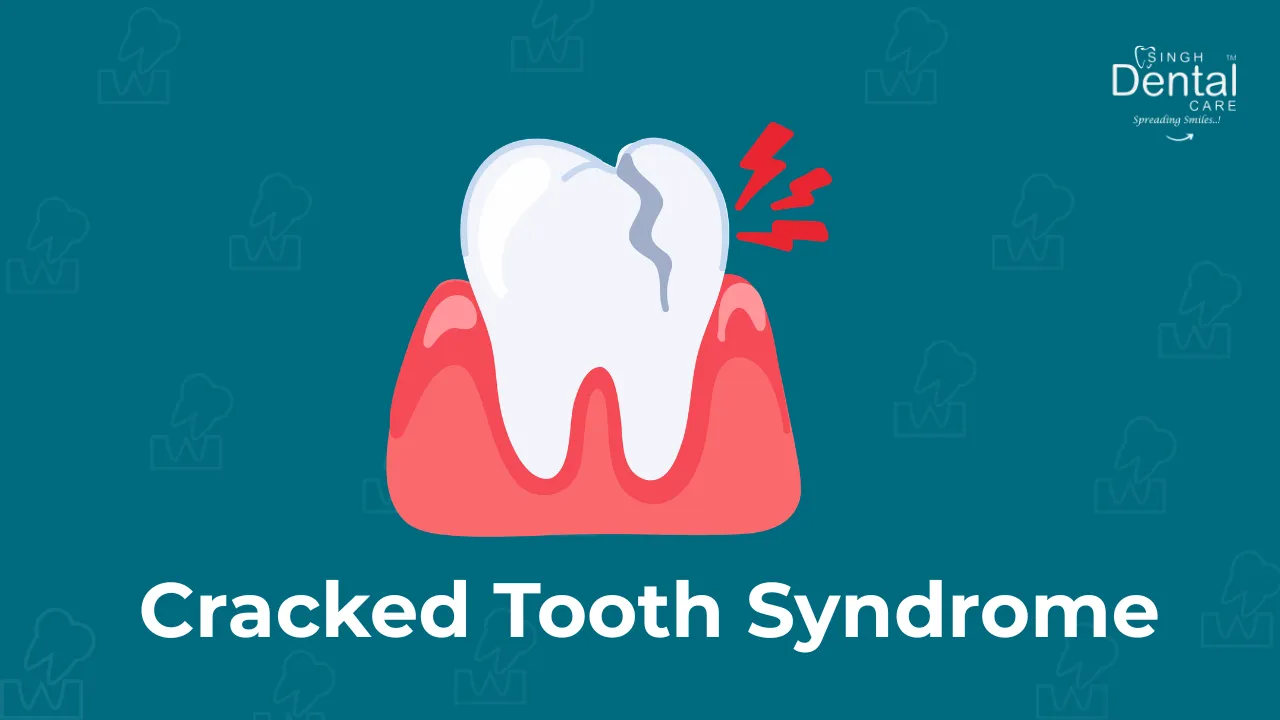
Cracked Tooth Syndrome
Understanding Cracked Tooth Syndrome
What Is Cracked Tooth Syndrome?
Cracked Tooth Syndrome (CTS) is a condition in which a tooth develops a small, incomplete crack that is often invisible to the naked eye. These cracks usually extend from the chewing surface toward the root but do not completely split the tooth.
Because the crack opens slightly when biting and closes when pressure is released, it can cause sharp pain that is often difficult to locate. Early diagnosis is essential, as untreated cracks can deepen and eventually lead to infection or tooth loss.
At Singh Dental Care, we use advanced diagnostic techniques to identify cracked teeth early and provide treatments that preserve your natural tooth whenever possible.
Signs and Symptoms
Sharp pain when biting or chewing
Pain when releasing biting pressure
Sensitivity to cold foods or drinks
Sensitivity to hot foods or beverages
Pain while chewing hard foods
Intermittent tooth pain that comes and goes
Difficulty identifying which tooth hurts
Swelling around the affected tooth (if infection develops)
Symptoms may vary depending on the size and depth of the crack.
Causes of Cracked Tooth Syndrome
Teeth Grinding (Bruxism) :- Excessive grinding or clenching places repeated stress on teeth.
Chewing Hard Foods :- Biting ice, hard candies, nuts or unpopped popcorn kernels can crack a tooth.
Large Dental Fillings :- Teeth with large restorations may become structurally weaker over time.
Trauma :- Sports injuries, falls or accidents can cause cracks.
Sudden Temperature Changes :- Rapidly alternating between very hot and very cold foods or drinks may contribute to enamel stress.
Aging :- Teeth naturally become more susceptible to cracks with age, particularly after 40 years.
Heavy Biting Forces :- Repeated chewing on one side of the mouth can increase stress on certain teeth.
Risk Factors :- You may be more likely to develop Cracked Tooth Syndrome if you:
Grind or clench your teeth
Frequently chew hard foods
Have large fillings
Have previously fractured teeth
Are over 40 years of age
Participate in contact sports without a mouthguard
Have untreated bite problems
Types of Tooth Cracks
Craze Lines :- Very small cracks affecting only the outer enamel. These are common and usually harmless.
Cracked Tooth :- A crack extending from the chewing surface toward the root without completely separating the tooth.
Fractured Cusp :- A portion of the tooth breaks around an existing filling. This usually does not involve the tooth pulp.
Split Tooth :- A crack that has progressed through the tooth, separating it into distinct segments. Extraction is often required.
Vertical Root Fracture :- A crack that begins in the root and extends upward. These fractures are often difficult to detect and may require extraction.
What Happens If Cracked Tooth Syndrome Is Left Untreated?
Increased pain
Pulp inflammation
Tooth infection
Dental abscess
Gum swelling
Need for root canal treatment
Tooth extraction if the crack becomes severe
Early treatment greatly improves the chances of saving the tooth.
Diagnosis at Singh Dental Care :- Our dental team carefully evaluates suspected cracked teeth using:
Clinical Examination :- Assessment of symptoms and visual inspection of the affected tooth.
Bite Test :- Special instruments help identify pain that occurs when biting or releasing pressure.
Digital X-Rays :- X-rays help evaluate surrounding bone and rule out other dental problems. Small cracks may not always be visible on X-rays.
Magnification and Illumination :- Dental magnification and specialized lighting help detect fine cracks.
Dye Staining :- In selected cases, special dyes may help reveal cracks on the tooth surface.
Pulp Vitality Testing :- Tests determine whether the tooth nerve remains healthy.
Treatment Options :- Treatment depends on the size, location, and depth of the crack.
Dental Crown :- A custom-made crown protects the tooth from further cracking and restores strength. This is the most common treatment for Cracked Tooth Syndrome.
Dental Bonding :- Small superficial cracks may be repaired using tooth-colored composite resin.
Root Canal Treatment :- If the crack extends into the dental pulp and causes nerve inflammation or infection, root canal treatment may be required before placing a crown.
Occlusal Adjustment :- Minor bite adjustments may reduce excessive pressure on the affected tooth.
Night Guard :- Patients with teeth grinding may benefit from a custom night guard to protect their teeth.
Tooth Extraction :- If the crack extends below the gumline or completely splits the tooth, extraction may be the only option.
Prevention Tips
Avoiding chewing ice and other hard objects
Wearing a mouthguard during contact sports
Using a custom night guard if you grind your teeth
Treating bite problems promptly
Avoiding using your teeth to open packages/bottles
Visiting your dentist regularly for early detection
Restoring weakened teeth before they fracture
FAQ
Q)Can a cracked tooth heal on its own?
A)No. Unlike bone, tooth enamel cannot repair itself. Professional dental treatment is required to prevent the crack from worsening.
Q)Why does my tooth hurt only when I bite?
A)Pain during biting or when releasing pressure is one of the classic signs of Cracked Tooth Syndrome.
Q)Can a cracked tooth be saved?
A)Yes. If diagnosed early, many cracked teeth can be successfully treated with a dental crown or other restorative procedures.
Q)Will I need a root canal?
A)Not always. Root canal treatment is only necessary if the crack has affected the dental pulp or caused infection.
Q)Can a cracked tooth be seen on an X-ray?
A)Not always. Many small cracks are invisible on standard dental X-rays and require clinical examination and special diagnostic tests.
Q)What happens if I ignore a cracked tooth?
A)The crack may become larger, leading to severe pain, infection, tooth fracture, and possibly tooth loss.
Dr. Bikramjeet Singh
BDS & Fellowship in ImplantologyChief Dental Surgeon & Implantologist • Singh Dental Care
This clinical condition overview has been authored and verified by dental specialists at Singh Dental Care to ensure evidence-based, safe, and accurate oral healthcare guidance.
Seek Professional Advice
Our specialists at Singh Dental Care are equipped with advanced technology to diagnose and treat cracked tooth syndrome with precision.
Disclaimer: The information provided above is for educational purposes only and should not be considered as medical advice. Please consult with a qualified dental professional for diagnosis and treatment options.