Disease & Condition Directory
Dental Crown/Cap
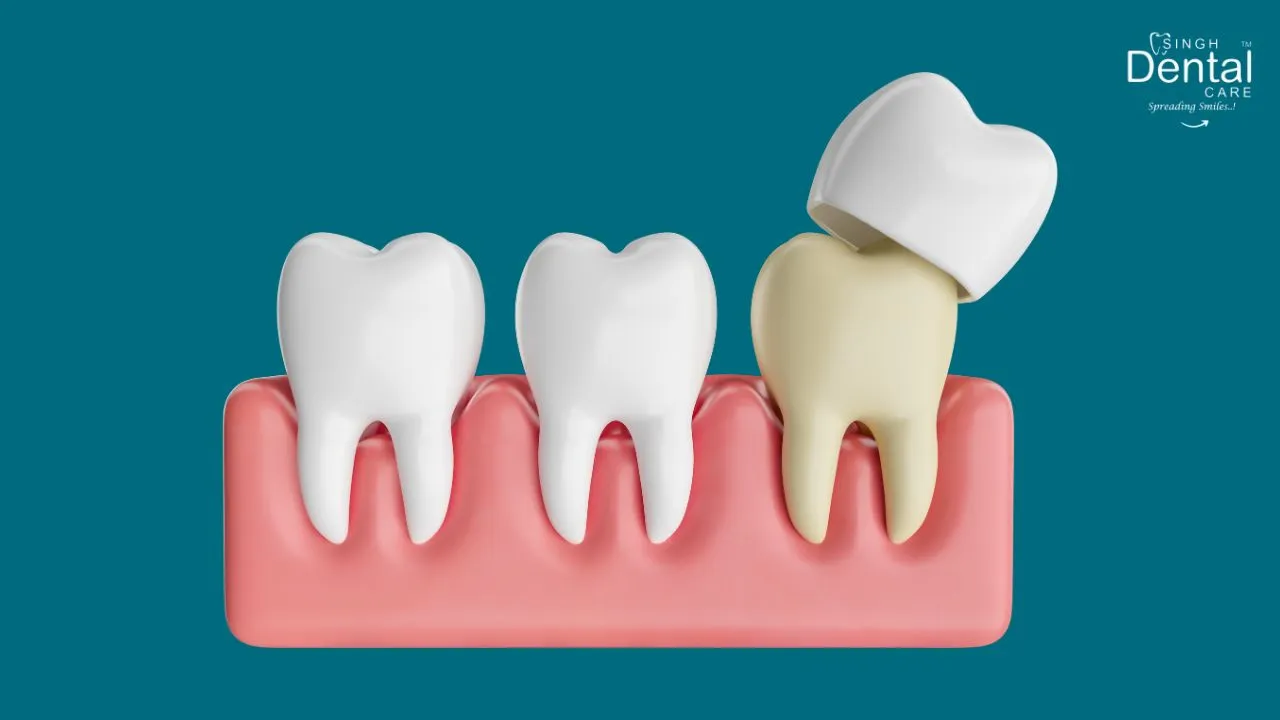
Crown/Cap
Understanding Dental Crown/Cap
What Is a Dental Crown/Cap?
A dental crown is a custom-made crown that completely covers the tooth surface which is damaged, weakened or aesthetically compromised. It restores the shape, size, strength and appearance of the tooth while protecting it from further damage.
Dental crowns are commonly used after root canal treatment for large cavities, fractured teeth, worn out teeth and for cosmetic smile improvements.
At Singh Dental Care, we provide high-quality dental crowns designed to restore both function and aesthetics, helping patients achieve a healthy and confident smile.
Why Might You Need a Dental Crown?
For a tooth weakened by a large cavity
A fractured or cracked tooth
After root canal treatment
Severely worn down teeth
Replacement of large old fillings
Cosmetic improvement of discolored teeth
After dental implant
Rehab in case of missing tooth (Dental bridge)
Types of Dental Crowns
Zirconia Crowns :- Highly durable and strong
Excellent aesthetics
Metal-free and biocompatible
Suitable for both anterior and posterior teeth
Porcelain Crowns :- Natural tooth-like appearance
Ideal for front teeth
Excellent cosmetic results
PFM Crowns :- Strong metal core with porcelain covering
Good durability and aesthetics
Widely used restorative option
Metal Crowns :- Extremely durable
Less tooth reduction required
Usually recommended for back teeth
Aesthetically compromised
E-Max Crowns :- Superior esthetics
Natural translucency
Excellent choice for cosmetic smile enhancement
How Is a Dental Crown Procedure Performed at Singh Dental Care?
Step 1:- Examination and Diagnosis :-
The dentist evaluates the tooth and may take digital X-rays to assess its condition.
Step 2:- Tooth Preparation :-
The tooth is reshaped to create space for the crown. If significant tooth structure is missing, a buildup(post & core) may be required before crown placement.
Step 3:- Impression or Digital Scan :-
An impression or digital scan is taken to fabricate a custom-fit crown.
Step 4:- Temporary Crown Placement :-
A temporary crown may be placed if needed while the permanent crown is being fabricated.
Step 5:- Permanent Crown Placement :-
The final crown is checked for fit, appearance and bite(occlusion)before being permanently cemented.
Benefits of Dental Crowns :-
Restores tooth strength and structure
Enhances the color, shape, and overall appearance of the tooth
Restores Function allowing normal chewing, speaking and biting
Provides long-term reinforcement after root canal treatment
Long-Lasting Solution as with care, crown can last for a long time
Acts as replacement of a missing tooth in case of Implants/Bridge
Recovery and Aftercare :- Follow all the instructions given by your Dentist
Maintain excellent oral hygiene
Brush and floss daily
Avoid chewing hard and sticky foods
Wear a night guard if you grind your teeth
Attend regular dental checkups
Most patients return to normal activities immediately after treatment.
Possible Risks and Complications :- Dental crowns are highly successful, but potential issues may include :-
Temporary tooth sensitivity
Crown loosening after some time
Crown fracture or chipping
Gum irritation/swelling
Bite discomfort or imbalanced occlusion
Recurrent decay around crown margins if hygiene is not maintained properly
If you face any of the above problem, then consult your dentist at earliest.
How Long Do Dental Crowns Last?
The lifespan of a dental crown depends on :-
Material used
Oral hygiene habits
Biting/occlusal forces
Teeth grinding habits
Regular dental checkup
With proper care, dental crowns often last 10–15 years or longer.
FAQ
Q) How many visits are generally required for a dental crown?
A) Crowns usually require two visits, while some digital systems may allow same-day crown placement.
Q) Will my crown look natural?
A) Yes, Crowns are designed to closely match the color, shape and appearance of natural teeth.
Q) Can a crowned tooth get a cavity?
A) Yes, cavity can develop at the margins of the crown if oral hygiene is not taken care of.
Q) Is a crown necessary after a root canal?
A) In most cases, crown is recommended to protect the tooth from fracture after root canal treatment.
Q) What should I do if my crown comes loose?
A) Contact your dentist as soon as possible for evaluation and recementation of the crown if appropriate.
Dr. Bikramjeet Singh
BDS & Fellowship in ImplantologyChief Dental Surgeon & Implantologist • Singh Dental Care
This clinical condition overview has been authored and verified by dental specialists at Singh Dental Care to ensure evidence-based, safe, and accurate oral healthcare guidance.
Seek Professional Advice
Our specialists at Singh Dental Care are equipped with advanced technology to diagnose and treat dental crown/cap with precision.
Disclaimer: The information provided above is for educational purposes only and should not be considered as medical advice. Please consult with a qualified dental professional for diagnosis and treatment options.