Disease & Condition Directory
Dental Implants
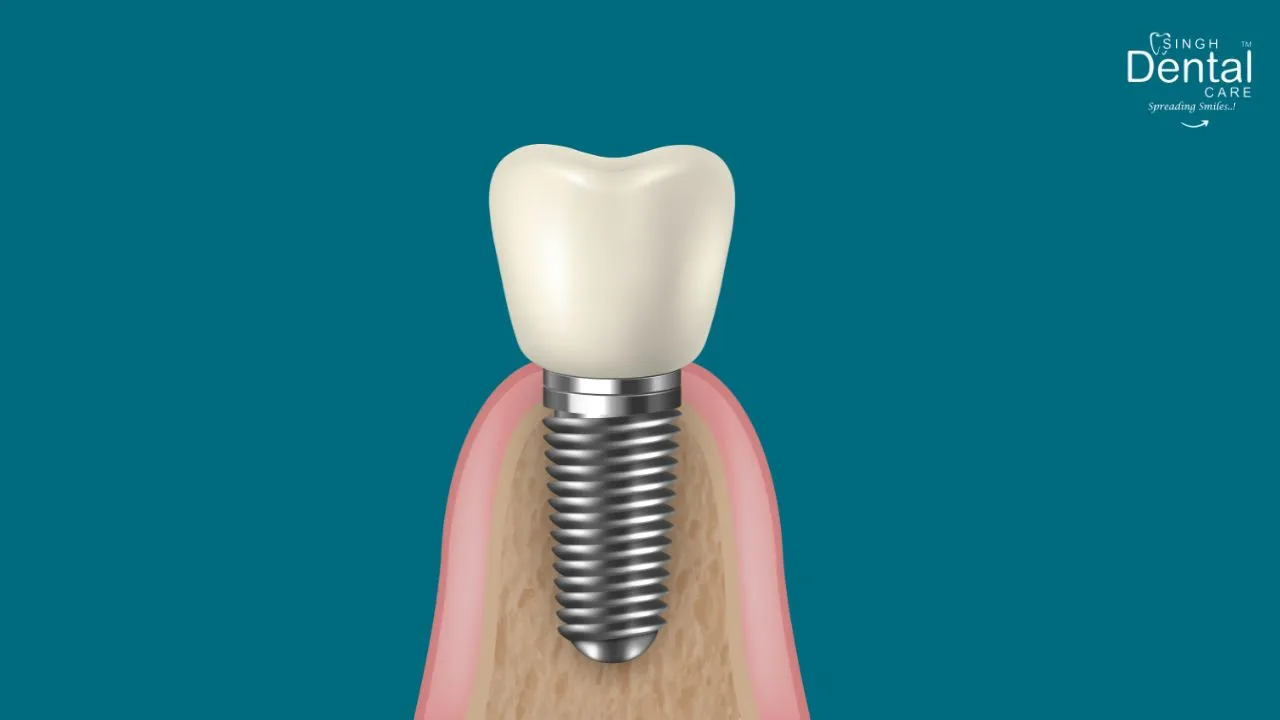
Dental Implants
Understanding Dental Implants
What Are Dental Implants?
Dental implants are advanced tooth replacement solutions designed to replace missing teeth with artificial tooth roots made of biocompatible titanium or zirconia. The implant is placed into the jawbone and serves as a strong foundation for a dental crown, bridge or denture.
Dental implants closely mimic the appearance, function, feel of natural teeth making them one of the most reliable and long-lasting tooth replacement options available.
At Singh Dental Care, we provide comprehensive implant consultations and advanced implant treatments to help restore your smile, confidence and oral function.
Why Might You Need a Dental Implant?
A missing tooth due to injury or trauma
A tooth extracted because of severe decay or infection
Difficulty chewing due to missing teeth
Loose or uncomfortable dentures
Bone loss resulting from tooth loss
Dental implants help restore both aesthetics and functionality while preserving jawbone health.
Signs That You May Be a Candidate for Dental Implants
Have one or more missing teeth
Have healthy gums
Have sufficient jawbone to support an implant
Want a fixed, long-term tooth replacement solution
Are uncomfortable with removable dentures
Desire a natural-looking smile restoration
Types of Dental Implants
Single Tooth Implant :- Used to replace one missing tooth without affecting neighboring teeth.
Multiple Dental Implants :- Used to replace several missing teeth and support bridges.
Full Mouth Dental Implants :- Used to restore an entire upper or lower arch of teeth.
Implant-Supported Dentures :- Provide improved stability and comfort compared to conventional dentures.
Immediate Implants :- Placed immediately after tooth extraction in selected cases.
How Is Dental Implant Treatment Performed?
Step 1: Consultation and Evaluation :- The dentist performs a comprehensive examination including digital X-rays,OPG and 3D CBCT scans to assess bone quality and treatment suitability.
Step 2: Treatment Planning :- A personalized implant treatment plan is created based on your oral health and restorative needs.
Step 3: Implant Placement Surgery :- The implant is surgically placed into the jawbone under local anesthesia.
Step 4: Healing and Osseointegration :- Over the next few months, the implant fuses with the surrounding bone through a natural process called osseointegration.
Step 5: Abutment Placement :- A connector called an abutment is attached to the implant.
Step 6: Final Crown Placement :- A custom-made dental crown, bridge or denture is securely attached to complete the restoration.
Is Dental Implant Surgery Painful?
Most patients report that implant placement is more comfortable than expected. The procedure is performed under local anesthesia and any post-operative discomfort is typically manageable with prescribed medications. Mild swelling and soreness may occur for a few days after surgery.
Benefits of Dental Implants
Natural Appearance :- Dental implants closely resemble natural teeth.
Restores Chewing Ability :- Allows you to eat and chew comfortably.
Preserves Jawbone :- Helps prevent bone loss that commonly occurs after tooth loss.
Long-Term Solution :- With proper care, implants can last for many years and often decades.
Protects Adjacent Teeth :- Unlike bridges, implants do not require reduction of neighboring healthy teeth.
Improved Speech and Comfort :- Eliminates many of the challenges associated with removable dentures.
Recovery and Aftercare
Take prescribed medications as directed
Maintain excellent oral hygiene
Avoid smoking and tobacco products
Eat soft foods during the initial healing period
Attend follow-up appointments
Brush and floss regularly around the implant
How Long Do Dental Implants Last?
Their longevity depends on :- Oral hygiene practices
Gum health
Bone support
Smoking habits
Regular dental checkups
With proper care, implants can last 15–25 years or longer.
10) FAQ
Q)Are dental implants safe?
A)Yes, Dental implants are a well-established and highly successful treatment option with decades of clinical research supporting their use.
Q)How long does implant treatment take?
A)Treatment duration varies but typically ranges from a few months to several months depending on healing and case complexity.
Q)Can anyone get dental implants?
A)Most healthy adults are candidates, but adequate bone support and good overall oral health are important factors.
Q)Will the implant look like a natural tooth?
A)Yes, The final crown is custom-designed to match the color, shape and appearance of your natural teeth.
Q)Can implants get cavities?
A)The implant itself cannot develop cavities, but the surrounding gums and bone still require proper care and maintenance.
Q)What happens if I do not replace a missing tooth?
A)Missing teeth can lead to shifting of adjacent teeth, bite problems, bone loss and difficulties with chewing and speech.
Dr. Bikramjeet Singh
BDS & Fellowship in ImplantologyChief Dental Surgeon & Implantologist • Singh Dental Care
This clinical condition overview has been authored and verified by dental specialists at Singh Dental Care to ensure evidence-based, safe, and accurate oral healthcare guidance.
Seek Professional Advice
Our specialists at Singh Dental Care are equipped with advanced technology to diagnose and treat dental implants with precision.
Disclaimer: The information provided above is for educational purposes only and should not be considered as medical advice. Please consult with a qualified dental professional for diagnosis and treatment options.