Disease & Condition Directory
Halitosis (Bad Breath)
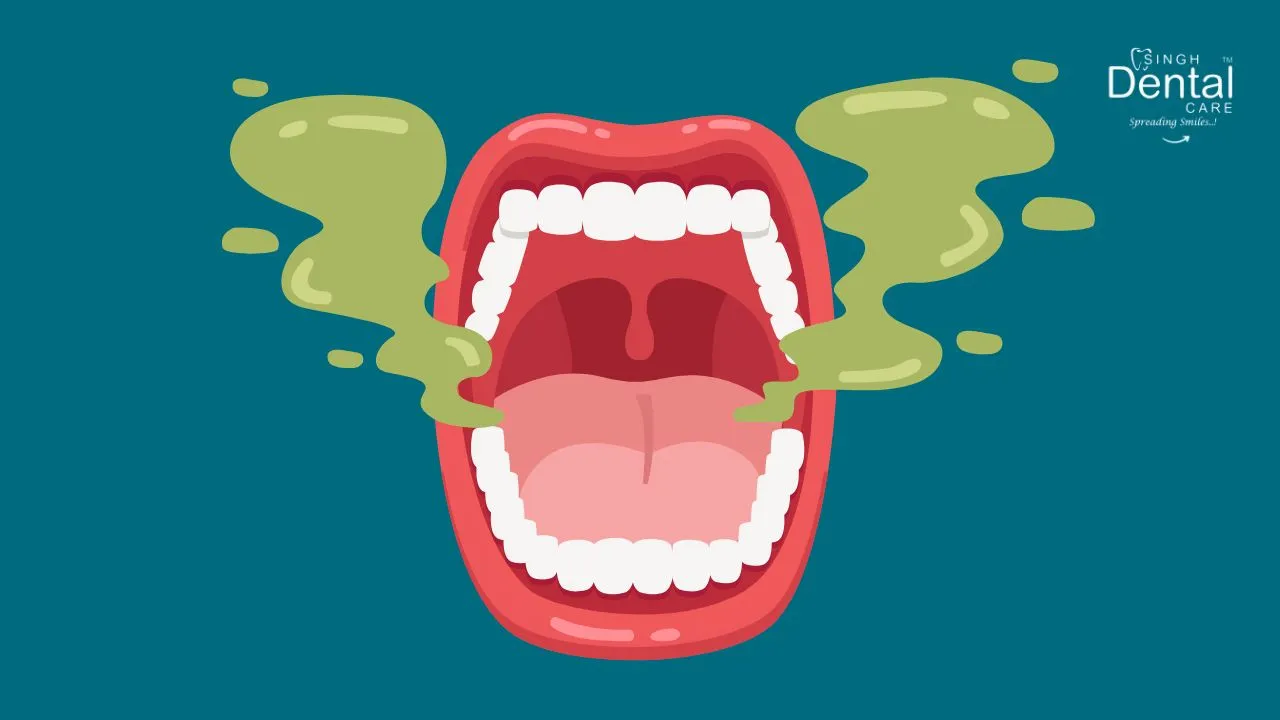
Bad breath
Understanding Halitosis (Bad Breath)
What Is Halitosis (Bad Breath)?
Bad breath, medically known as halitosis, is a condition characterized by an unpleasant odor coming from the mouth. It is a common problem that can affect people of all ages and may be temporary or persistent.
While occasional bad breath may occur after eating certain foods, persistent halitosis is often a sign of an underlying dental or medical condition that requires professional evaluation.
At Singh Dental Care, we identify the underlying cause of bad breath and provide personalized treatment to help you achieve fresh breath and maintain optimal oral health.
Signs and Symptoms
Persistent unpleasant breath
Bad taste in the mouth
Dry mouth (Xerostomia)
White coating on the tongue
Thick saliva
Frequent need to use mouth fresheners
Bad breath noticed by family, friends, or colleagues
Bleeding gums while brushing
Loose teeth in advanced gum disease
Causes of Bad Breath
Poor Oral Hygiene :- Plaque accumulation allows bacteria to break down food particles, producing foul-smelling gases.
Gum Disease :- Gingivitis and periodontitis are among the most common causes of persistent bad breath.
Tongue Coating :- Bacteria trapped on the rough surface of the tongue can produce unpleasant odors.
Tooth Decay :- Untreated cavities can harbor bacteria and food debris.
Dry Mouth (Xerostomia) :- Reduced saliva production allows odor-causing bacteria to multiply.
Food Impaction :- Food trapped between teeth, around wisdom teeth, or beneath dental restorations can produce bad breath.
Smoking and Tobacco Use :- Tobacco products contribute to bad breath and increase the risk of gum disease.
Certain Foods :- Garlic, onions, spices, coffee, and alcohol may temporarily affect breath odor.
Poorly Cleaned Dentures :- Dentures that are not cleaned regularly can accumulate bacteria and fungi.
Medical Conditions :- In some cases, bad breath may be associated with:
Sinus infections
Tonsillitis
Acid reflux (GERD)
Diabetes
Respiratory infections
Liver disease
Kidney disease
Risk Factors
Have poor oral hygiene
Smoke or use tobacco products
Have gum disease
Have untreated tooth decay
Experience dry mouth
Wear dentures
Frequently consume sugary foods
Have certain medical conditions affecting the mouth or digestive system.
Types of Halitosis
Temporary Halitosis :- Usually caused by certain foods, dehydration or morning dry mouth and improves with good oral hygiene.
Chronic Halitosis :- Persistent bad breath caused by underlying dental or medical conditions that require professional treatment.
What Happens If Bad Breath Is Left Untreated?
Social embarrassment
Reduced self-confidence
Progression of gum disease
Increased tooth decay
Tooth loss due to advanced periodontal disease
Undiagnosed medical conditions remaining untreated
Treating the underlying cause not only improves breath but also supports overall health.
Diagnosis at Singh Dental Care :- Our dental team evaluates bad breath through:-
Clinical Examination :- Assessment of teeth, gums, tongue, saliva, and oral tissues.
Medical and Dental History :- Review of oral hygiene habits, diet, medications, and medical conditions.
Gum Health Assessment :- Evaluation for gingivitis or periodontitis.
Dental Examination :- Detection of cavities, defective restorations, food impaction, or infected teeth.
Saliva Assessment :- Evaluation of saliva production to identify dry mouth.
Treatment Options
Professional Dental Cleaning (Scaling and Polishing) :- Removes plaque and tartar that harbor odor-causing bacteria.
Treatment of Gum Disease :- Deep cleaning and periodontal therapy help eliminate infection.
Treatment of Tooth Decay :- Fillings, root canal treatment or crowns may be required for infected or decayed teeth.
Tongue Cleaning :- Regular tongue cleaning helps reduce bacterial buildup.
Management of Dry Mouth :- Saliva substitutes, hydration and treatment of underlying causes may be recommended.
Denture Cleaning :- Proper denture hygiene reduces bacterial and fungal growth.
Improved Oral Hygiene :- Personalized brushing and flossing techniques help prevent recurrence.
Medical Referral :- If halitosis is related to a systemic condition, appropriate medical treatment may be necessary.
Prevention Tips
Brush your teeth twice daily with fluoride toothpaste
Floss every day
Clean your tongue daily using a tongue scraper or toothbrush
Drink plenty of water
Visit your dentist every six months
Avoid smoking and tobacco products
Clean dentures thoroughly every day
Limit sugary foods and beverages
Treat gum disease and cavities promptly
FAQ
Q)What is the most common cause of bad breath?
A)Poor oral hygiene and gum disease are the most common causes of persistent bad breath.
Q)Can bad breath be cured?
A)Yes. In most cases, bad breath can be successfully treated once the underlying cause is identified and managed.
Q)Does mouthwash permanently eliminate bad breath?
A)No. Mouthwash may temporarily mask the odor but does not treat the underlying cause of chronic halitosis.
Q)Can stomach problems cause bad breath?
A)Yes. Although less common than dental causes, conditions such as acid reflux (GERD) and certain digestive disorders can contribute to bad breath.
Q)Why do I have bad breath even after brushing?
A)Persistent bad breath may be caused by gum disease, tongue coating, dry mouth, tooth decay, or an underlying medical condition that requires professional evaluation.
Q)Can dry mouth cause bad breath?
A)Yes. Saliva naturally cleanses the mouth and reduced saliva production allows odor-causing bacteria to multiply.
Dr. Bikramjeet Singh
BDS & Fellowship in ImplantologyChief Dental Surgeon & Implantologist • Singh Dental Care
This clinical condition overview has been authored and verified by dental specialists at Singh Dental Care to ensure evidence-based, safe, and accurate oral healthcare guidance.
Seek Professional Advice
Our specialists at Singh Dental Care are equipped with advanced technology to diagnose and treat halitosis (bad breath) with precision.
Disclaimer: The information provided above is for educational purposes only and should not be considered as medical advice. Please consult with a qualified dental professional for diagnosis and treatment options.