Disease & Condition Directory
Indirect Pulp Capping
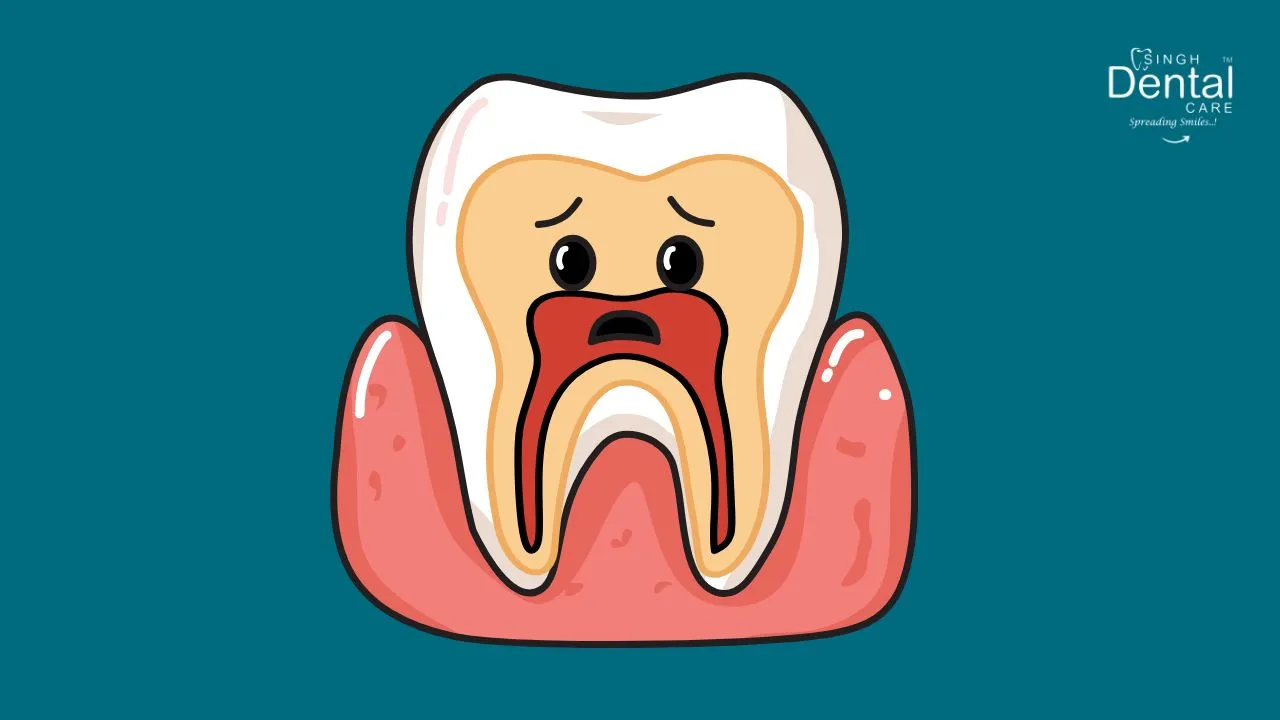
Indirect Pulp Capping
Understanding Indirect Pulp Capping
What Is Indirect Pulp Capping?
Indirect pulp capping is a conservative, tooth-saving procedure performed to preserve the health and vitality of the dental pulp (nerve) when tooth decay extends very close to the pulp but has not yet exposed it.
Instead of removing all the deep decay and risking pulp exposure, the dentist carefully removes most of the infected dentin, leaves a thin layer of affected dentin over the pulp and places a special protective medicated material. This material encourages healing, promotes the formation of new dentin (reparative dentin) and helps prevent the need for root canal treatment.
At Singh Dental Care, we use modern bioactive materials and minimally invasive techniques to preserve your natural tooth whenever possible.
Why Might You Need Indirect Pulp Capping?
Your dentist may recommend indirect pulp capping if you have:
Deep tooth decay approaching the pulp
A tooth with reversible pulp inflammation (Reversible Pulpitis)
No actual exposure of the dental pulp
Mild sensitivity to cold or sweets
A tooth that is still considered vital (alive)
A deep cavity where preserving the pulp is possible
The goal is to save the natural tooth and avoid more extensive treatment.
Signs That You May Be a Candidate for Indirect Pulp Capping
You may benefit from indirect pulp capping if you experience:
Mild to moderate tooth sensitivity
Short-lasting pain when eating sweets or drinking cold beverages
A deep cavity diagnosed during a dental examination
No spontaneous or continuous toothache
No swelling or pus around the tooth
Your dentist will determine whether the pulp is healthy enough for this procedure.
When Is Indirect Pulp Capping Recommended?
Indirect pulp capping is commonly recommended for:
Deep Dental Caries :- When decay is very close to the pulp but has not exposed it.
Reversible Pulpitis :- When the pulp is mildly inflamed but capable of healing.
Young Permanent Teeth :- To preserve pulp vitality and allow continued tooth development.
Primary (Baby) Teeth :- Selected baby teeth with deep decay may also benefit from indirect pulp treatment to maintain them until natural exfoliation
How Is Indirect Pulp Capping Performed?
Step 1: Clinical Examination :- The dentist examines the tooth and evaluates your symptoms.
Step 2: Digital X-Rays :- X-rays help determine the depth of decay and confirm that the pulp has not been irreversibly damaged.
Step 3: Local Anesthesia :- The tooth is numbed to ensure a comfortable procedure
Step 4: Removal of Decay :- Most of the infected tooth structure is carefully removed while preserving a thin layer of affected dentin over the pulp to avoid exposing the nerve.
Step 5: Placement of Protective Material:- A bioactive material such as calcium hydroxide, Mineral Trioxide Aggregate (MTA), or a calcium silicate-based material is placed over the remaining dentin to protect the pulp and stimulate healing.
Step 6: Permanent Restoration:- The tooth is sealed with a durable filling. In some cases, a dental crown may be recommended if a large portion of the tooth has been lost.
Is Indirect Pulp Capping Painful?
No. The procedure is performed under local anesthesia, making it comfortable and virtually painless. Some patients may experience mild sensitivity for a few days after treatment, which usually resolves as the tooth heals.
Benefits of Indirect Pulp Capping
Preserves the Natural Tooth Nerve :- Maintains the vitality of the dental pulp.
Avoids Root Canal Treatment :- When successful, it eliminates the need for more invasive procedures.
Encourages Natural Healing :- Bioactive materials stimulate the formation of reparative dentin.
Conserves Tooth Structure :- Only the necessary amount of tooth structure is removed.
Reduces Treatment Time and Cost :- Preserving the pulp is generally less invasive and more economical than root canal treatment.
Supports Long-Term Tooth Health :- Maintains the tooth's natural strength and sensory function.
Recovery and Aftercare
After indirect pulp capping:
Avoid chewing very hard foods on the treated tooth for the first 24 hours.
Maintain good oral hygiene.
Brush twice daily with fluoride toothpaste.
Floss every day.
Attend follow-up appointments as recommended.
Contact your dentist if pain increases instead of improving.
Most patients resume normal activities immediately after treatment.
Possible Risks and Limitations
Although indirect pulp capping has a high success rate, possible outcomes include:
Persistent tooth sensitivity
Failure of the pulp to heal
Progression to irreversible pulpitis
Need for root canal treatment if symptoms develop later
Failure due to poor sealing of the restoration
Regular follow-up helps monitor healing and detect any problems early.
How Successful Is Indirect Pulp Capping?
When the case is carefully selected and properly treated, indirect pulp capping has a high success rate.
Success depends on:
The health of the dental pulp
Complete sealing of the restoration
Excellent oral hygiene
Regular dental follow-up
Early treatment before irreversible pulp damage occurs.
FAQ
Q)What is the difference between indirect pulp capping and direct pulp capping?
A)Indirect pulp capping is performed when the pulp is not exposed, whereas direct pulp capping is performed when a small pulp exposure has occurred and the pulp remains healthy.
Q)Will I still need a root canal?
A)Not necessarily. The purpose of indirect pulp capping is to preserve the pulp and avoid root canal treatment. However, if the pulp later becomes infected or irreversibly inflamed, root canal treatment may be required.
Q)Is indirect pulp capping permanent?
A)Yes. If the pulp heals successfully and the restoration remains well sealed, the tooth can remain healthy for many years.
Q)Is the procedure suitable for children?
A)Yes. Indirect pulp capping is commonly performed on both permanent and selected baby teeth when preserving the pulp is possible.
Q)What materials are used for indirect pulp capping?
A)Dentists commonly use calcium hydroxide, Mineral Trioxide Aggregate (MTA), Biodentine, or other calcium silicate-based bioactive materials.
Q)How will I know if the treatment has failed?
A)Persistent pain, spontaneous toothache, prolonged sensitivity, swelling, or infection may indicate pulp damage and should be evaluated immediately.
Dr. Bikramjeet Singh
BDS & Fellowship in ImplantologyChief Dental Surgeon & Implantologist • Singh Dental Care
This clinical condition overview has been authored and verified by dental specialists at Singh Dental Care to ensure evidence-based, safe, and accurate oral healthcare guidance.
Seek Professional Advice
Our specialists at Singh Dental Care are equipped with advanced technology to diagnose and treat indirect pulp capping with precision.
Disclaimer: The information provided above is for educational purposes only and should not be considered as medical advice. Please consult with a qualified dental professional for diagnosis and treatment options.