Disease & Condition Directory
Midline Diastema
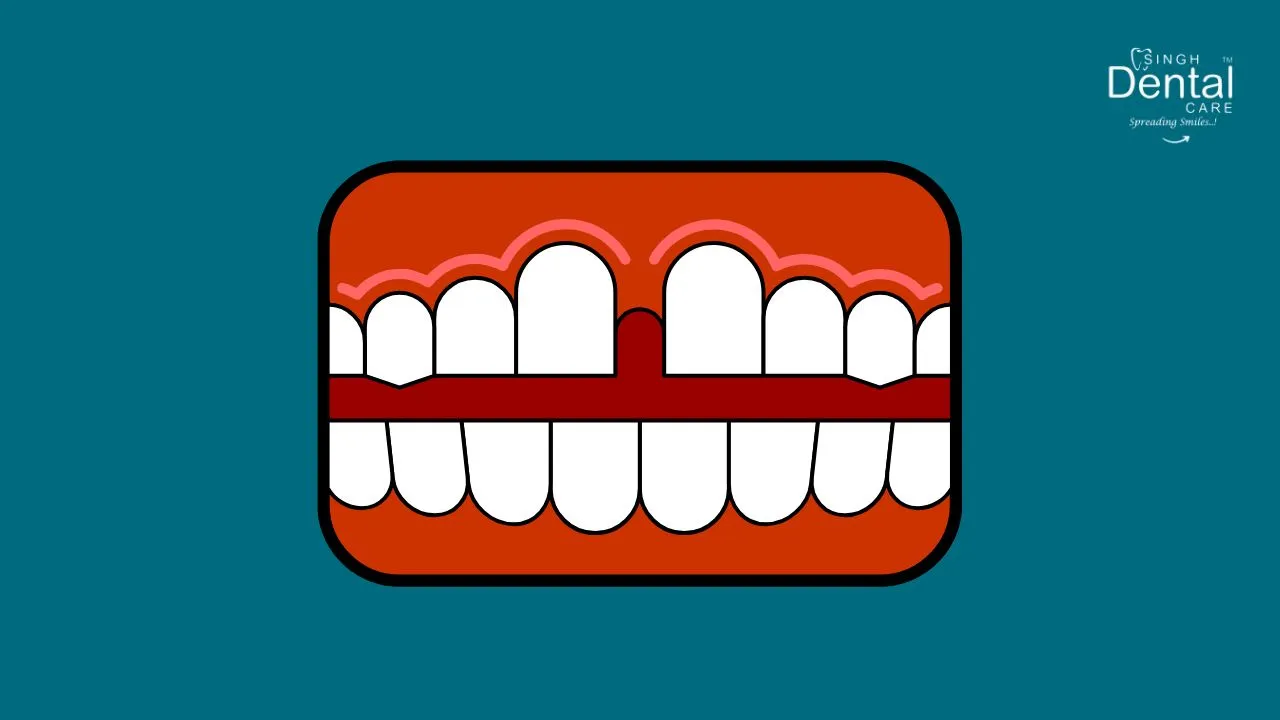
Midline Diastema
Understanding Midline Diastema
What Is a Midline Diastema?
A midline diastema is a gap or space between the two upper front teeth (maxillary central incisors). It is a common dental condition that can occur in children, teenagers, and adults.
In young children, a midline diastema is often a normal part of dental development and may close naturally as the permanent canine teeth erupt. However, in adolescents and adults, a persistent gap may result from various dental or skeletal factors and may require treatment if it affects appearance, function, or oral health.
At Singh Dental Care, we identify the underlying cause of the gap and provide personalized treatment options to create a healthy, natural-looking smile.
Signs and Symptoms
Common features of a midline diastema include:
Visible gap between the upper front teeth
Cosmetic concerns about the smile
Food getting trapped between the teeth
Difficulty pronouncing certain words in some cases
Teeth drifting apart over time
Associated spacing between other teeth
Gum enlargement or abnormal frenum attachment in some patients.
Causes of Midline Diastema
Several factors can contribute to the development of a midline diastema.
Normal Growth and Development :- A temporary gap is common during the mixed dentition stage and often closes naturally when the permanent canine teeth erupt.
High Labial Frenum Attachment :- A thick or low-attaching labial frenum (the tissue connecting the upper lip to the gums) may prevent the front teeth from coming together.
Missing Teeth :- Congenitally missing teeth or teeth lost due to trauma or extraction can create spacing.
Small Teeth (Microdontia) :- Teeth that are smaller than normal may leave extra space.
Jaw-Tooth Size Discrepancy :- A large jaw with relatively small teeth can result in spacing.
Thumb Sucking or Tongue Thrusting :- These oral habits may push the front teeth apart over time.
Gum Disease (Periodontitis) :- Advanced periodontal disease can cause tooth movement and the development of spaces.
Supernumerary Teeth (Mesiodens) :- An extra tooth between the front teeth may prevent normal eruption and closure of the space.
Risk Factors
You may be more likely to develop a midline diastema if you:
Have a family history of spacing between teeth
Have a thick or low-attached labial frenum
Have missing or unusually small teeth
Practice thumb sucking or tongue thrusting
Have untreated gum disease
Have an extra tooth (mesiodens)
Have jaw and tooth size discrepancies
Types of Midline Diastema
Developmental Diastema :- A temporary gap seen in children that often closes naturally during normal dental development.
Pathological Diastema :- A persistent gap caused by an underlying condition such as a high frenum, missing teeth, oral habits or periodontal disease.
Orthodontic Diastema :- A gap associated with tooth alignment or bite problems that can be corrected with orthodontic treatment.
What Happens If a Midline Diastema Is Left Untreated?
A midline diastema may remain stable, but in some cases it can lead to:
Increased spacing over time
Food impaction between teeth
Difficulty maintaining oral hygiene
Cosmetic concerns
Speech difficulties in selected cases
Bite problems
Tooth movement due to gum disease
Diagnosis at Singh Dental Care :-
Our dental team carefully evaluates the cause of the gap through:
Clinical Examination :- Assessment of the size of the diastema, tooth alignment, bite, and gum health.
Medical and Dental History :- Evaluation of oral habits, previous orthodontic treatment, trauma, and family history.
Frenum Assessment :- Examination of the labial frenum to determine whether it contributes to the spacing.
Digital X-Rays :- X-rays help identify missing teeth, impacted teeth, supernumerary teeth, and bone support.
Orthodontic Assessment :- Evaluation of jaw growth and tooth positioning to determine whether orthodontic treatment is indicated.
Treatment Options
Orthodontic Braces :- Braces gradually move the teeth together and correct associated bite problems.
Clear Aligners :- Transparent aligners are an aesthetic option for suitable cases.
Composite Bonding :- Tooth-colored composite resin can close small gaps quickly and conservatively.
Porcelain Veneers :- Veneers improve both tooth shape and close spaces for selected patients seeking cosmetic enhancement.
Frenectomy :- If a high or thick labial frenum is the cause, a minor surgical procedure called a frenectomy may be recommended, often in combination with orthodontic treatment.
Dental Crowns :- Crowns may be indicated when teeth are damaged or require significant restoration in addition to space closure.
Replacement of Missing Teeth :- Dental implants, bridges, or partial dentures may be recommended when missing teeth contribute to spacing.
Periodontal Treatment :- If gum disease is responsible, periodontal therapy is performed before cosmetic or orthodontic treatment.
Prevention Tips
Maintaining good oral hygiene
Treating gum disease early
Correcting thumb sucking or tongue thrusting habits during childhood
Attending regular dental check-ups
Replacing missing teeth promptly
Following orthodontic retention instructions after treatment.
FAQ
Q)Is a gap between the front teeth normal?
A)Yes. In young children, a temporary gap is often part of normal dental development and may close naturally as the permanent teeth erupt.
Q)Can a midline diastema close on its own?
A)In children, it often does. In adolescents and adults, persistent gaps usually require treatment if they do not close naturally.
Q)Will braces completely close the gap?
A)In most cases, yes. Orthodontic treatment can successfully close the gap when the underlying cause is appropriately managed.
Q)What is a frenectomy?
A)A frenectomy is a minor surgical procedure that removes or repositions an abnormally attached labial frenum that may be preventing the front teeth from closing together.
Q)Can composite bonding close a gap?
A)Yes. Small to moderate gaps can often be closed quickly with tooth-colored composite bonding when appropriate.
Q)Can the gap return after treatment?
A)Yes. Teeth may drift apart again if the underlying cause is not addressed or if retainers are not worn after orthodontic treatment. Your dentist or orthodontist will recommend the appropriate retention plan.
Dr. Bikramjeet Singh
BDS & Fellowship in ImplantologyChief Dental Surgeon & Implantologist • Singh Dental Care
This clinical condition overview has been authored and verified by dental specialists at Singh Dental Care to ensure evidence-based, safe, and accurate oral healthcare guidance.
Seek Professional Advice
Our specialists at Singh Dental Care are equipped with advanced technology to diagnose and treat midline diastema with precision.
Disclaimer: The information provided above is for educational purposes only and should not be considered as medical advice. Please consult with a qualified dental professional for diagnosis and treatment options.