Disease & Condition Directory
Oral Cancer
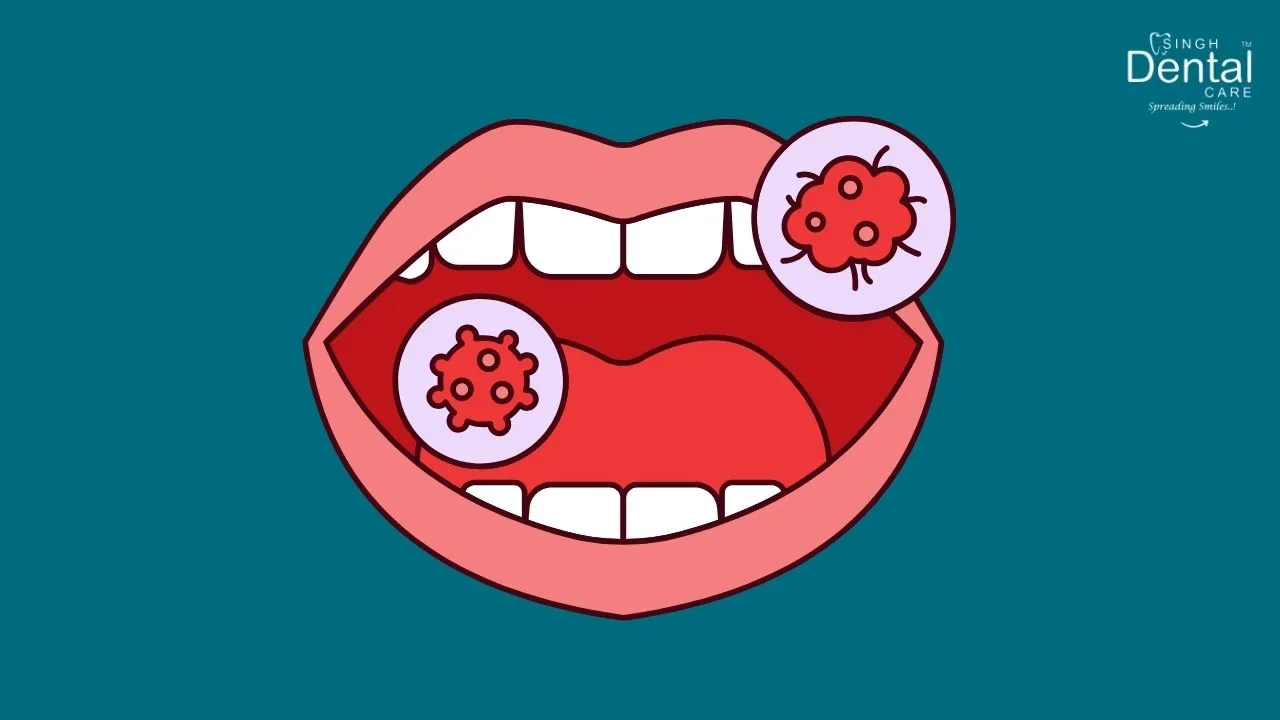
Oral Cancer
Understanding Oral Cancer
What Is Oral Cancer?
Oral cancer is a type of cancer that develops in the tissues of the mouth or oral cavity. It can affect the lips, tongue, cheeks, gums, floor of the mouth, hard palate, soft palate, or the area behind the wisdom teeth. The most common type is oral squamous cell carcinoma, which begins in the thin, flat cells lining the mouth.
When detected early, oral cancer has a significantly better chance of successful treatment. Regular dental check-ups play a vital role in early detection because dentists are often the first healthcare professionals to identify suspicious oral lesions.
At Singh Dental Care, every comprehensive dental examination includes an oral cancer screening to detect suspicious changes as early as possible.
Signs and Symptoms :- Early oral cancer may be painless, making routine dental examinations extremely important.
Common signs and symptoms include:
A mouth ulcer that does not heal within two weeks
Red patches (Erythroplakia)
White patches (Leukoplakia)
Red and white mixed patches
Persistent pain or soreness in the mouth
A lump or thickened area inside the mouth
Difficulty chewing or swallowing
Persistent sore throat
Difficulty moving the tongue or jaw
Loose teeth without an obvious cause
Numbness of the lips, tongue or mouth
Unexplained bleeding from the mouth
Persistent bad breath
Voice changes
Ear pain without an ear infection
Swelling in the neck due to enlarged lymph nodes
Causes of Oral Cancer :- Oral cancer develops due to abnormal growth of cells, often influenced by several risk factors.
Tobacco Use :- Smoking cigarettes, cigars, pipes and using smokeless tobacco significantly increase the risk.
Alcohol Consumption :- Heavy alcohol use substantially increases the risk, especially when combined with tobacco.
Human Papillomavirus (HPV) :- Certain strains of HPV, particularly HPV-16, are associated with cancers affecting the mouth and throat.
Betel Nut (Areca Nut) and Gutka :- Chewing betel nut, gutka, paan, khaini or similar products is a major risk factor, especially in South Asian countries.
Excessive Sun Exposure :- Prolonged sun exposure increases the risk of lip cancer.
Poor Nutrition :- A diet lacking fruits and vegetables may contribute to increased risk.
Chronic Irritation :- Although chronic irritation alone does not directly cause oral cancer, it may contribute alongside other risk factors.
Weakened Immune System :- Individuals with reduced immunity may have an increased risk.
Risk Factors
Smoke or use tobacco products
Consume alcohol heavily
Chew gutka, paan, betel nut, or areca nut
Have HPV infection
Are over 40 years of age
Have prolonged sun exposure affecting the lips
Have a family history of cancer
Have poor oral hygiene combined with other risk factors
Have a previous history of oral cancer
Types of Oral Cancer :- Depending on the area involved, oral cancer may occur in:
Lip Cancer :- Usually affects the lower lip and is often related to tobacco use or sun exposure.
Tongue Cancer :- One of the most common forms of oral cancer.
Buccal Mucosa Cancer :- Occurs on the inner lining of the cheeks and is frequently associated with tobacco and betel nut chewing.
Floor of Mouth Cancer :- Develops beneath the tongue.
Gum (Gingival) Cancer :- Affects the gums surrounding the teeth.
Palatal Cancer :- Occurs on the roof of the mouth.
What Happens If Oral Cancer Is Left Untreated?
Without treatment, oral cancer can:
Grow deeper into surrounding tissues
Spread to nearby lymph nodes
Invade the jawbone
Affect speech and swallowing
Spread to other parts of the body (metastasis)
Become life-threatening
Early diagnosis greatly improves treatment success and survival
Diagnosis at Singh Dental Care :- Our dental team performs a comprehensive oral cancer screening during routine examinations.
Clinical Oral Examination :- Careful inspection of the lips, tongue, cheeks, gums, palate, and floor of the mouth.
Neck Examination :- Assessment of lymph nodes for swelling or enlargement.
Medical and Lifestyle History :- Evaluation of tobacco use, alcohol consumption, betel nut chewing, HPV risk factors, and family history.
Special Screening Tests : In selected cases, additional oral cancer screening aids may be recommended.
Biopsy Referral :- If a suspicious lesion is identified, referral for a biopsy is essential to confirm the diagnosis.
Imaging Studies :- CT scans, MRI, ultrasound, or PET scans may be recommended by specialists to determine the extent of disease.
Treatment Options :- Treatment depends on the stage, location, and extent of the cancer.
Surgical Removal :- The primary treatment for many oral cancers involves removing the cancerous tissue.
Radiation Therapy :- High-energy radiation destroys cancer cells and may be used alone or after surgery.
Chemotherapy :- Cancer-killing medications may be recommended for advanced disease or combined with radiation therapy.
Targeted Therapy :- Certain medications specifically target cancer cells while minimizing damage to healthy tissue.
Immunotherapy :- Some advanced oral cancers may be treated using medications that help the immune system fight cancer.
Rehabilitation :- Speech therapy, swallowing therapy, nutritional support, and reconstructive surgery may be necessary after treatment.
Prevention Tips
Although not all cases are preventable, you can significantly reduce your risk by:
Avoiding all forms of tobacco
Avoiding gutka, paan, betel nut and areca nut products
Limiting alcohol consumption
Maintaining good oral hygiene
Eating a balanced diet rich in fruits and vegetables
Using lip balm with sun protection when outdoors
Receiving HPV vaccination where appropriate
Visiting your dentist regularly for oral cancer screening
Seeking prompt evaluation of any mouth ulcer lasting more than two weeks.
FAQ
Q)Is oral cancer curable?
A)Yes. When detected early, oral cancer has a much higher chance of successful treatment and cure.
Q)Does every mouth ulcer mean cancer?
A)No. Most mouth ulcers are not cancerous. However, any ulcer that does not heal within two weeks should be examined by a dentist or oral surgeon.
Q)Can non-smokers develop oral cancer?
A)Yes. Although tobacco greatly increases the risk, oral cancer can also occur in non-smokers due to HPV infection, genetic factors, or other causes.
Q)Is oral cancer painful?
A)Early oral cancer is often painless. Pain usually develops as the disease progresses.
Q)Who should have oral cancer screening?
A)Everyone should receive routine oral cancer screening during regular dental check-ups, especially individuals who smoke, consume alcohol, chew tobacco or betel nut, or are over 40 years of age.
Q)Can oral cancer be prevented?
A)While not all cases can be prevented, avoiding tobacco, alcohol misuse, and betel nut products, along with regular dental examinations, can significantly reduce the risk and improve early detection.
Dr. Bikramjeet Singh
BDS & Fellowship in ImplantologyChief Dental Surgeon & Implantologist • Singh Dental Care
This clinical condition overview has been authored and verified by dental specialists at Singh Dental Care to ensure evidence-based, safe, and accurate oral healthcare guidance.
Seek Professional Advice
Our specialists at Singh Dental Care are equipped with advanced technology to diagnose and treat oral cancer with precision.
Disclaimer: The information provided above is for educational purposes only and should not be considered as medical advice. Please consult with a qualified dental professional for diagnosis and treatment options.