Disease & Condition Directory
Pit and Fissure Sealants
Pit and Fissure
Understanding Pit and Fissure Sealants
What Are Pit and Fissure Sealants?
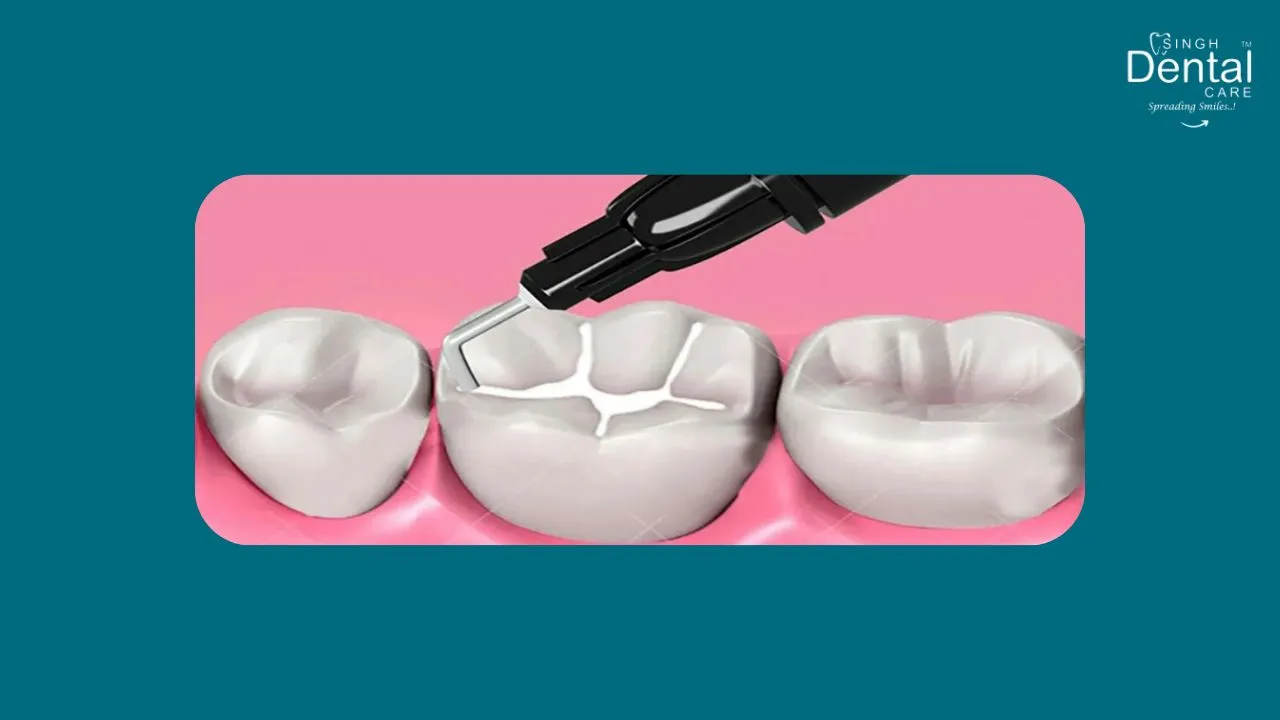
Pit and fissure sealants are thin, protective coatings made of tooth-colored dental resin that are applied to the chewing surfaces of the back teeth (molars and premolars). These teeth have deep grooves (pits and fissures) where food particles and bacteria can easily become trapped, making them more susceptible to tooth decay.
Sealants act as a protective barrier, preventing plaque and bacteria from entering these grooves and significantly reducing the risk of cavities.
At Singh Dental Care, we recommend pit and fissure sealants as a simple, painless and highly effective preventive treatment for both children and adults who are at increased risk of tooth decay.
Why Might You Need Pit and Fissure Sealants?
Have deep grooves on your molars or premolars
Are at high risk of developing cavities
Have newly erupted permanent molars
Have difficulty cleaning the back teeth
Have a history of frequent tooth decay
Want to protect healthy teeth from future cavities
Sealants are especially beneficial for children and teenagers, but adults with cavity-free molars may also benefit.
Signs That You May Be a Candidate for Pit and Fissure Sealants
Have deep pits and grooves in your back teeth
Have newly erupted permanent molars
Frequently develop cavities
Have difficulty maintaining oral hygiene in the back teeth
Consume sugary foods or drinks frequently
Have no existing cavities on the chewing surfaces of the teeth being treated
A dental examination will determine whether sealants are appropriate for your teeth.
Who Can Benefit from Pit and Fissure Sealants?
Children :- Sealants are commonly recommended soon after the eruption of the first and second permanent molars to protect them from decay.
Teenagers :- Adolescents with deep grooves or increased cavity risk can benefit from sealants.
Adults :- Adults with healthy molars and deep pits or fissures may also benefit from preventive sealant placement.
How Are Pit and Fissure Sealants Applied?
Step 1: Dental Examination :- The dentist examines the teeth to ensure they are free from cavities or determines whether minor preventive treatment is needed first.
Step 2: Tooth Cleaning :- The chewing surfaces are thoroughly cleaned to remove plaque and debris.
Step 3: Tooth Preparation :- A special conditioning gel is applied briefly to the enamel to improve the bonding of the sealant.
Step 4: Rinsing and Drying :- The tooth is rinsed and carefully dried to create an ideal bonding surface.
Step 5: Sealant Application :- The liquid sealant material is flowed into the pits and fissures of the tooth.
Step 6: Light Curing :- A special curing light is used to harden the sealant within a few seconds.
Step 7: Final Evaluation :- The dentist checks the sealant for complete coverage and ensures that your bite feels comfortable.
Is the Procedure Painful?
No. Pit and fissure sealant placement is completely painless.
No drilling is usually required.
No injections or anesthesia are needed.
The procedure is quick, comfortable, and completed in a single visit.
Most patients return to normal activities immediately after treatment.
Benefits of Pit and Fissure Sealants
Prevents Tooth Decay :- Sealants significantly reduce the risk of cavities on chewing surfaces.
Protects Deep Grooves :- They seal areas that are difficult to clean with a toothbrush.
Quick and Painless :- The entire procedure usually takes only a few minutes per tooth.
Preserves Healthy Tooth Structure :- Sealants help prevent the need for fillings and more extensive treatments.
Long-Lasting Protection :- With proper care, sealants can protect teeth for several years.
Cost-Effective Preventive Care :- Preventing cavities is often more affordable than treating them.
Recovery and Aftercare
After sealant placement:
You can eat and drink immediately unless advised otherwise.
Brush twice daily with fluoride toothpaste.
Floss every day.
Avoid chewing extremely hard objects such as ice or pens.
Attend regular dental checkups so your dentist can monitor the condition of the sealants.
Possible Risks and Limitations
Sealants may wear down over time and require replacement.
They are not suitable for teeth with large cavities or extensive restorations.
Small chips or partial loss of sealant may occur with heavy chewing habits.
Rarely, minor bite adjustments may be required after placement.
Regular dental visits help ensure that sealants remain intact and effective
How Long Do Pit and Fissure Sealants Last?
The lifespan of sealants depends on:
Oral hygiene habits
Chewing forces
Diet
Regular dental checkups
Most sealants last 5–10 years, although they should be examined at routine dental visits and repaired or replaced if necessary.
FAQ
Q)What is the ideal age for sealants?
A)Sealants are usually recommended soon after the permanent molars erupt, typically between 6–7 years for the first molars and 11–13 years for the second molars. Adults with deep grooves may also benefit.
Q)Can adults get pit and fissure sealants?
A)Yes. Adults with healthy molars that have deep pits and fissures may benefit from sealants if they are at increased risk of cavities.
Q)Do sealants replace brushing and flossing?
A)No. Sealants provide additional protection but do not replace good oral hygiene practices.
Q)Can sealants be placed over small cavities?
A)In selected cases involving very early enamel lesions, your dentist may recommend preventive sealing. Teeth with larger cavities usually require restorative treatment.
Q)Will I feel the sealants on my teeth?
A)Initially, you may notice a slight difference in texture, but most patients adapt within a day or two.
Q)Are sealants safe?
A)Yes. Dental sealants have been used safely for decades and are considered an effective preventive treatment.
Dr. Bikramjeet Singh
BDS & Fellowship in ImplantologyChief Dental Surgeon & Implantologist • Singh Dental Care
This clinical condition overview has been authored and verified by dental specialists at Singh Dental Care to ensure evidence-based, safe, and accurate oral healthcare guidance.
Seek Professional Advice
Our specialists at Singh Dental Care are equipped with advanced technology to diagnose and treat pit and fissure sealants with precision.
Disclaimer: The information provided above is for educational purposes only and should not be considered as medical advice. Please consult with a qualified dental professional for diagnosis and treatment options.