Disease & Condition Directory
Post and Core
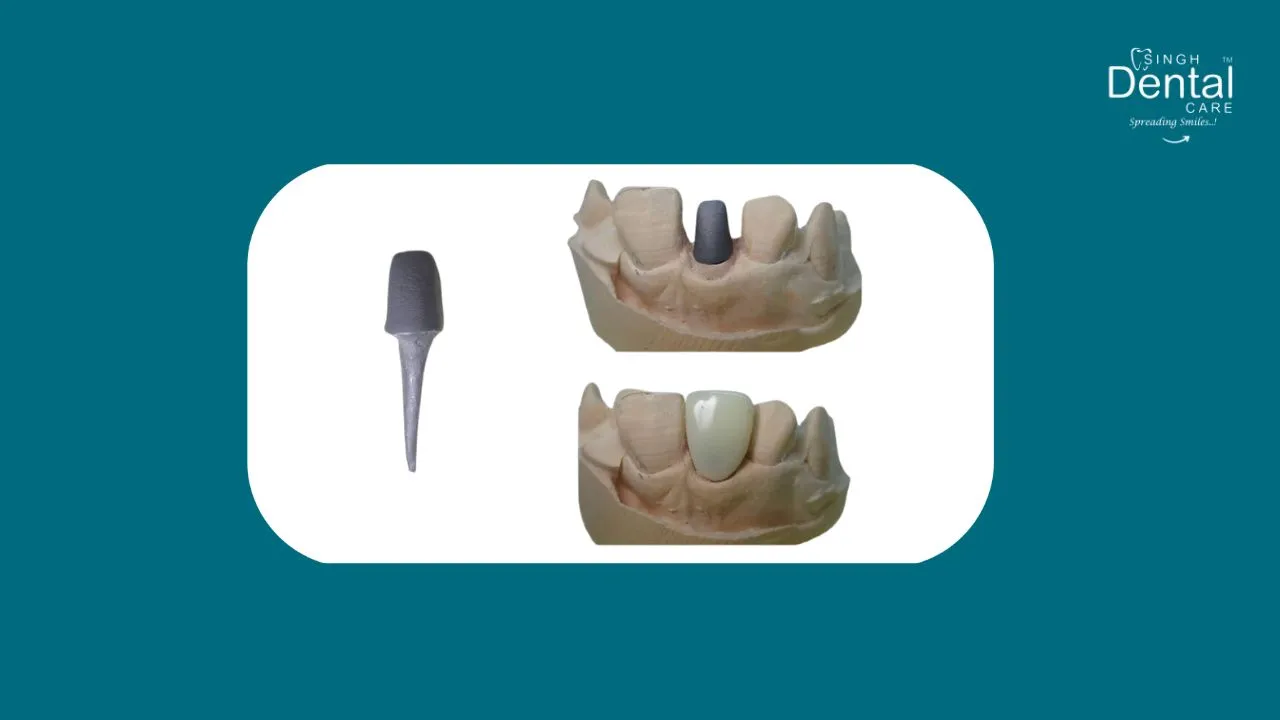
Post and Core
Understanding Post and Core
What Is a Post and Core?
A post and core is a restorative dental procedure used to rebuild a tooth that has been severely damaged or weakened after root canal treatment. When there is not enough natural tooth structure remaining to support a dental crown, a post is placed inside the cleaned root canal and a core material is built around it to recreate the missing portion of the tooth.
The post provides retention for the core, while the core serves as the foundation for the final dental crown.
At Singh Dental Care, we use modern post and core techniques to restore strength, function and longevity to root canal-treated teeth.
Why Might You Need a Post and Core?
A tooth with extensive decay
A severely broken tooth
Significant loss of tooth structure after root canal treatment
A fractured tooth requiring crown support
A tooth that cannot adequately retain a dental crown on its own
A post and core helps preserve your natural tooth and provides the necessary support for long-term restoration.
Signs That You May Need a Post and Core
A root canal-treated tooth with very little remaining tooth structure
A fractured or broken tooth
A large missing portion of the tooth
Difficulty supporting a dental crown
A tooth weakened by repeated fillings or trauma
A clinical examination and X-rays help determine whether a post and core is required.
Types of Post and Core
Fiber Post :- Tooth-colored and highly aesthetic
Flexible and similar to natural dentin
Reduces the risk of root fracture
Commonly used for front teeth
Metal Post :- Made from stainless steel or other dental alloys
Strong and durable
Often used for back teeth with high biting forces
Cast Post and Core :- Custom-made as a single unit in a dental laboratory
Recommended for teeth with extensive structural loss
Provides excellent fit and retention
Prefabricated Post :- Available in standard sizes
Combined with a composite core built directly in the mouth
Frequently used in modern restorative dentistry
How Is a Post and Core Procedure Performed?
Step 1: Clinical Examination :- The dentist evaluates the root canal-treated tooth and takes digital X-rays to assess the remaining tooth structure and root health.
Step 2: Root Canal Assessment :- The quality of the previous root canal treatment is checked to ensure the tooth is suitable for restoration.
Step 3: Post Space Preparation :- A portion of the root canal filling material is carefully removed while preserving the seal at the root tip.
Step 4: Post Placement :- The selected post is placed into the prepared root canal and securely bonded or cemented.
Step 5: Core Build-Up :- A strong restorative material is placed around the post to rebuild the missing tooth structure.
Step 6: Crown Preparation and Placement :- The rebuilt tooth is prepared for a custom dental crown, which is later cemented to provide full protection and restore normal function
Is a Post and Core Procedure Painful?
No. Since the tooth has already undergone root canal treatment, there is usually little or no discomfort during the procedure.Local anesthesia may be used if required to ensure maximum comfort.
Some patients may experience mild tenderness for a short period after treatment
Benefits of a Post and Core
Restores Severely Damaged Teeth :- Rebuilds teeth with extensive structural loss.
Provides Strong Crown Support :- Creates a stable foundation for a dental crown.
Preserves the Natural Tooth :- Allows retention of the natural tooth instead of extraction.
Restores Function :- Improves chewing efficiency and bite stability.
Enhances Longevity :- Increases the success and durability of crown restorations.
Improves Aesthetics :- Tooth-colored fiber posts provide excellent cosmetic results for front teeth.
Recovery and Aftercare
Avoid chewing hard foods on the treated tooth until the final crown is placed
Maintain excellent oral hygiene
Brush twice daily and floss regularly
Attend all follow-up appointments
Wear a night guard if you grind your teeth
Avoid using the tooth to bite hard objects
Most patients can return to normal daily activities immediately.
Possible Risks and Complications
Post loosening
Root fracture
Failure of bonding
Recurrent decay around the crown
Fracture of the core material
Failure of the underlying root canal treatment
Proper treatment planning and regular dental checkups help minimize these risks.
How Long Does a Post and Core Last?
The longevity of a post and core depends on :-
Quality of the root canal treatment
Amount of remaining tooth structure
Type of post used
Oral hygiene
Bite forces
Regular dental maintenance
With proper care and a well-fitting crown, a post and core restoration can last many years.
FAQ
Q)Is a post the same as a dental implant?
A)No. A post is placed inside the root of your existing natural tooth after root canal treatment, whereas a dental implant replaces a missing tooth entirely.
Q)Does every root canal-treated tooth need a post?
A)No. A post is only required when there is insufficient natural tooth structure to support a crown.
Q)Is a crown necessary after a post and core?
A)Yes. In most cases, a dental crown is essential to protect the rebuilt tooth and restore full function.
Q)Which is better:- fiber post or metal post?
A)Both have advantages. Fiber posts are more aesthetic and flexible, while metal posts may be preferred in certain situations requiring greater rigidity. Your dentist will recommend the most suitable option based on your case.
Q)Can a post strengthen the root?
A)No. A post does not strengthen the root itself. Its primary purpose is to retain the core that supports the crown.
Q)How successful is a post and core procedure?
A)When performed correctly and combined with a well-fitting crown, post and core restorations have a high long-term success rate.
Dr. Bikramjeet Singh
BDS & Fellowship in ImplantologyChief Dental Surgeon & Implantologist • Singh Dental Care
This clinical condition overview has been authored and verified by dental specialists at Singh Dental Care to ensure evidence-based, safe, and accurate oral healthcare guidance.
Seek Professional Advice
Our specialists at Singh Dental Care are equipped with advanced technology to diagnose and treat post and core with precision.
Disclaimer: The information provided above is for educational purposes only and should not be considered as medical advice. Please consult with a qualified dental professional for diagnosis and treatment options.