Disease & Condition Directory
Sjögren's Syndrome
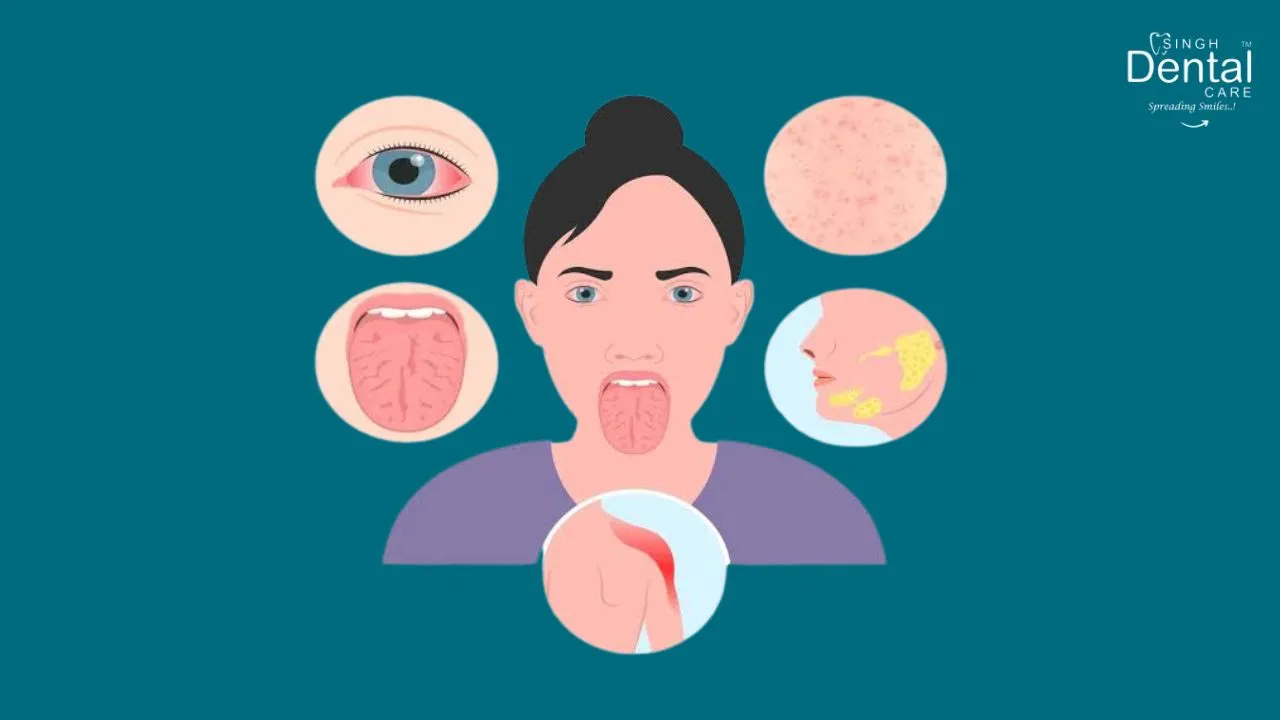
Understanding Sjögren's Syndrome
What Is Sjögren's Syndrome?
Sjögren's Syndrome is a chronic autoimmune disease in which the body's immune system mistakenly attacks its own moisture-producing glands, particularly the salivary glands and tear glands. As a result, patients commonly experience dry mouth (xerostomia) and dry eyes.
Although the condition primarily affects the glands that produce saliva and tears, it can also involve the joints, skin, lungs, kidneys, nerves and other organs.
Because reduced saliva significantly increases the risk of tooth decay, gum disease, oral infections and difficulty eating or speaking, regular dental care plays an essential role in managing Sjögren's Syndrome.
At Singh Dental Care, we work closely with physicians and rheumatologists to help patients manage the oral complications of Sjögren's Syndrome and maintain long-term oral health.
Signs and Symptoms :- The symptoms vary from person to person.
Persistent dry mouth (Xerostomia)
Difficulty chewing or swallowing dry foods
Frequent thirst
Dry or sticky feeling in the mouth
Difficulty speaking for long periods
Burning sensation of the tongue or mouth
Altered or reduced sense of taste
Cracked lips
Recurrent mouth ulcers
Frequent dental cavities
Bad breath (Halitosis)
Difficulty wearing dentures comfortably
Dry eyes with burning or gritty sensation
Joint pain and stiffness
Swollen salivary glands, especially near the jaw and ears.
Causes of Sjögren's Syndrome :- The exact cause is unknown, but it is believed to result from a combination of genetic, immune and environmental factors.
Autoimmune Reaction :- The immune system mistakenly attacks healthy salivary and tear glands.
Genetic Predisposition :- Certain genetic factors may increase susceptibility.
Hormonal Factors:- The condition occurs more commonly in women, suggesting hormonal influences.
Environmental Triggers :- Certain viral or bacterial infections may trigger the disease in genetically susceptible individuals.
Risk Factors
You may have a higher risk of Sjögren's Syndrome if you:
Are female
Are over 40 years of age
Have another autoimmune disease such as rheumatoid arthritis or lupus
Have a family history of autoimmune diseases
Have chronic dry eyes and dry mouth
Types of Sjögren's Syndrome
Primary Sjögren's Syndrome :- Occurs independently without another underlying autoimmune disease.
Secondary Sjögren's Syndrome :- Develops in association with another autoimmune condition, such as:
Rheumatoid arthritis
Systemic lupus erythematosus (SLE)
Systemic sclerosis
Autoimmune thyroid disease
What Happens If Sjögren's Syndrome Is Left Untreated?
Severe dry mouth
Rapid tooth decay
Gum disease
Oral fungal infections (Oral Thrush)
Difficulty eating and swallowing
Persistent bad breath
Tooth loss
Dry eye complications affecting vision
Joint pain and fatigue
Increased risk of systemic complications involving other organs
Diagnosis at Singh Dental Care :- Our dental team evaluates oral manifestations of Sjögren's Syndrome through:
Clinical Examination :- Assessment of saliva production, oral tissues, teeth, and gums.
Medical and Dental History :- Review of symptoms such as dry mouth, dry eyes, fatigue, medications, and autoimmune diseases.
Salivary Flow Assessment :- Measurement of saliva production when indicated.
Dental Examination :- Evaluation for cavities, gum disease, fungal infections, and other complications associated with dry mouth.
Digital X-Rays :- Assessment of overall dental health and early detection of tooth decay.
Medical Referral :- If Sjögren's Syndrome is suspected, referral to a physician or rheumatologist may be recommended for further investigations, including blood tests, eye examinations, and occasionally a minor salivary gland biopsy.
Treatment Options :- Although there is no permanent cure, treatment focuses on relieving symptoms and preventing complications.
Management of Dry Mouth :- Patients are advised to drink water frequently, use saliva substitutes, and maintain excellent oral hygiene.
Saliva-Stimulating Products :- Sugar-free chewing gum or lozenges containing xylitol may help stimulate saliva production.
Prescription Medications :- Certain medications may be prescribed by your physician to increase saliva production.
Professional Fluoride Therapy :- Regular fluoride applications help protect against tooth decay.
Treatment of Dental Problems :- Prompt treatment of cavities, gum disease, and oral infections is essential.
Artificial Tears :- Eye lubricants may be recommended by an ophthalmologist to relieve dry eyes.
Systemic Medical Treatment :- Patients with significant autoimmune symptoms may require medications prescribed by a rheumatologist to control the disease.
Prevention Tips
Although Sjögren's Syndrome cannot be prevented, you can reduce oral complications by:
Drinking water frequently throughout the day
Brushing twice daily with fluoride toothpaste
Flossing every day
Using alcohol-free mouthwash
Avoiding tobacco products
Limiting sugary foods and acidic beverages
Using sugar-free chewing gum containing xylitol
Visiting your dentist every 3–6 months
Following your physician's treatment plan.
FAQ
Q)Is Sjögren's Syndrome curable?
A)No. Sjögren's Syndrome is a chronic autoimmune disease, but its symptoms can be effectively managed with appropriate medical and dental care.
Q)Why does Sjögren's Syndrome cause cavities?
A)Reduced saliva decreases the mouth's natural protection against bacteria and acids, significantly increasing the risk of tooth decay.
Q)Is dry mouth always caused by Sjögren's Syndrome?
A)No. Dry mouth is more commonly caused by medications, dehydration, or other medical conditions. Sjögren's Syndrome is one possible cause.
Q)Can Sjögren's Syndrome affect organs other than the mouth?
A)Yes. It can also affect the eyes, joints, lungs, kidneys, nerves, skin, and other organs.
Q)How often should patients with Sjögren's Syndrome visit the dentist?
A)Most patients benefit from dental examinations every 3–6 months, depending on their individual risk of tooth decay and gum disease.
Q)Can Sjögren's Syndrome cause bad breath?
A)Yes. Reduced saliva allows odor-causing bacteria to multiply, leading to persistent bad breath.
Dr. Bikramjeet Singh
BDS & Fellowship in ImplantologyChief Dental Surgeon & Implantologist • Singh Dental Care
This clinical condition overview has been authored and verified by dental specialists at Singh Dental Care to ensure evidence-based, safe, and accurate oral healthcare guidance.
Seek Professional Advice
Our specialists at Singh Dental Care are equipped with advanced technology to diagnose and treat sjögren's syndrome with precision.
Disclaimer: The information provided above is for educational purposes only and should not be considered as medical advice. Please consult with a qualified dental professional for diagnosis and treatment options.