Disease & Condition Directory
Tooth Extraction
Tooth Extraction
Understanding Tooth Extraction
What Is Tooth Extraction?
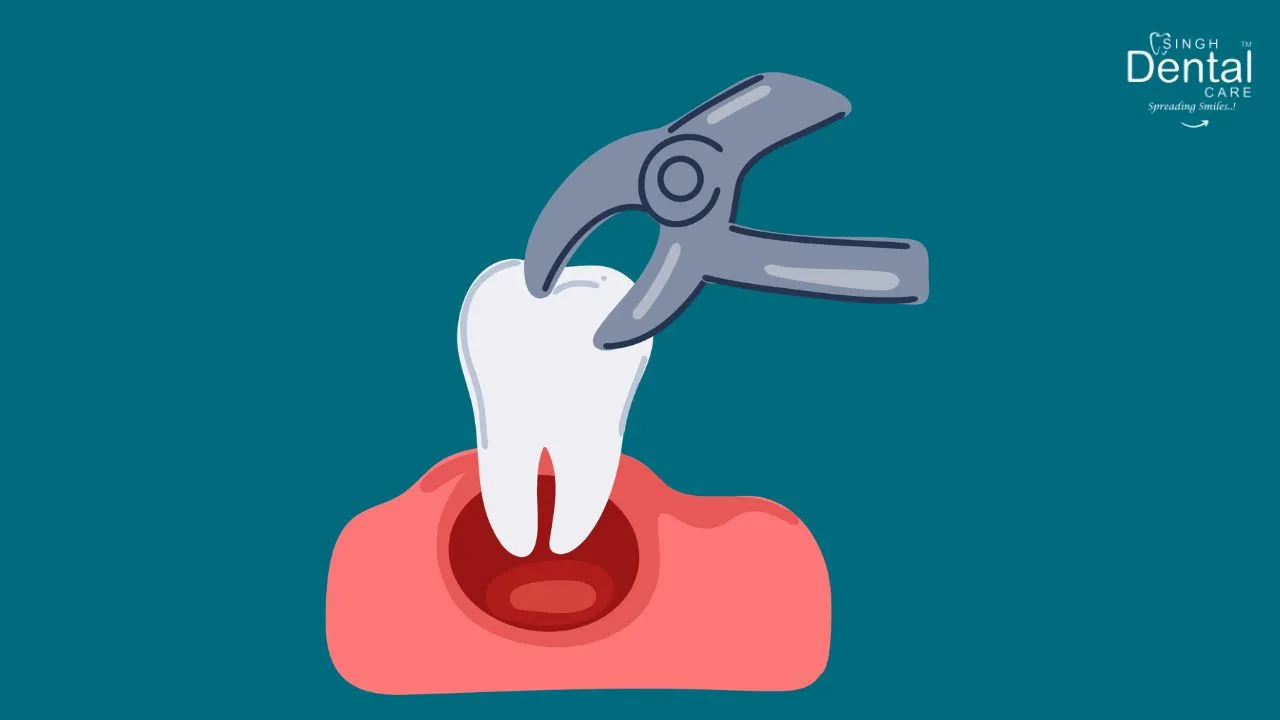
Tooth extraction is a dental procedure in which a tooth is carefully removed from its socket in the jawbone. Although preserving natural teeth is always the primary goal, extraction may be necessary when a tooth is severely damaged, infected or cannot be restored with other dental treatments.
Tooth extraction may be a simple extraction for visible teeth or a surgical extraction for impacted or broken teeth.
At Singh Dental Care, we perform comfortable and safe tooth extractions using modern techniques, advanced anesthesia and personalized aftercare to ensure a smooth recovery.
Why Might You Need a Tooth Extraction?
Severe tooth decay that cannot be restored
Advanced gum disease causing loose teeth
A badly fractured or broken tooth
An impacted tooth
Severe tooth infection that cannot be treated with root canal therapy
Overcrowded teeth requiring orthodontic treatment
Retained baby teeth preventing permanent tooth eruption
Traumatic dental injuries
Non-restorable teeth
Whenever possible, your dentist will first consider treatments such as fillings, crowns or root canal therapy before recommending extraction.
Signs That You May Need a Tooth Extraction
A tooth that is badly broken below the gumline
Loose teeth due to advanced gum disease
Recurrent dental infections
Difficulty chewing because of a damaged tooth
Impacted or partially erupted teeth causing pain
Extensive decay that cannot be repaired
A thorough examination and digital X-rays help determine whether extraction is the best treatment option.
Types of Tooth Extractions
Simple Extraction :- Performed on teeth that are fully visible in the mouth. The tooth is gently loosened and removed under local anesthesia.
Surgical Extraction :- Required for impacted, broken or severely damaged teeth. A small incision in the gum and occasionally, removal of a small amount of bone may be necessary.
How Is a Tooth Extraction Performed?
Step 1: Consultation and Examination :- The dentist examines your tooth and reviews your medical and dental history.
Step 2: Digital X-Rays :- X-rays are taken to evaluate the tooth, surrounding bone, roots, and nearby structures.
Step 3: Local Anesthesia :- The area around the tooth is numbed to ensure a comfortable and pain-free procedure.
Step 4: Tooth Removal :- The dentist gently loosens and removes the tooth using specialized dental instruments. Surgical techniques may be used when necessary.
Step 5: Cleaning the Socket :- The extraction site is cleaned thoroughly to remove any debris or infected tissue.
Step 6: Sutures (If Required) :- Stitches may be placed for surgical extractions to promote proper healing.
Step 7: Gauze Placement :- A sterile gauze pad is placed over the extraction site to help control bleeding and promote clot formation.
Is Tooth Extraction Painful?
No. Tooth extraction is performed under local anesthesia, so you should not feel pain during the procedure. After the anesthesia wears off, mild discomfort, swelling and tenderness are normal and can usually be managed with prescribed medications.
Most patients recover comfortably within a few days.
Benefits of Tooth Extraction
Relieves Pain :- Removes severely damaged or infected teeth causing discomfort.
Eliminates Infection :- Helps prevent the spread of dental infections to surrounding tissues.
Protects Adjacent Teeth :- Prevents damage caused by severely decayed or impacted teeth.
Supports Orthodontic Treatment :- Creates space when required for proper tooth alignment.
Improves Oral Health :- Removes teeth that cannot be restored, allowing healthier treatment options.
Prevents Future Complications :- Reduces the risk of abscess formation, bone loss and recurrent infections.
Recovery and Aftercare :- Following a tooth extraction:-
Bite firmly on the gauze for the recommended time.
Take prescribed medications as directed.
Apply an ice pack during the first 24 hours to reduce swelling.
Eat soft foods for the first few days.
Avoid smoking, alcohol and using straws during the healing period.
Do not rinse vigorously for the first 24 hours.
Brush gently, avoiding the extraction site.
Keep all follow-up appointments.
Most patients resume normal activities within 24–48 hours, although complete healing may take several weeks.
Possible Risks and Complications
Bleeding
Swelling
Temporary jaw stiffness
Dry socket (loss of the protective blood clot)
Infection
Delayed healing
Temporary numbness (rare, mainly with lower wisdom teeth)
Sinus communication for certain upper back teeth (rare)
Your dentist will provide detailed instructions to reduce these risks.
How Long Does Recovery Take?
Healing varies depending on the complexity of the extraction.
First 24 hours: Blood clot forms and bleeding subsides.
2–3 days: Swelling and discomfort begin to improve.
7–10 days: Soft tissue healing is well underway.
Several weeks: The gum continues to heal.
Several months: The jawbone gradually remodels completely.
FAQ
Q)Can I drive home after a tooth extraction?
A)Most patients can drive home after a simple extraction performed under local anesthesia. If sedation has been used, you should arrange for someone to accompany you.
Q)What foods can I eat after extraction?
A)Soft foods such as yogurt, mashed potatoes, soup, rice, smoothies (without a straw), scrambled eggs and soft fruits are recommended during the initial healing period.
Q)What is a dry socket?
A)A dry socket occurs when the protective blood clot is lost too early, exposing the underlying bone. It can cause significant pain and requires prompt dental treatment.
Q)When can I brush my teeth?
A)You can brush your teeth the same day, but avoid brushing directly over the extraction site for the first few days.
Q)Should I replace the extracted tooth?
A)In many cases, yes. Missing teeth may be replaced with dental implants, bridges or dentures to restore chewing function, appearance and prevent shifting of adjacent teeth.
Q)How long should I avoid smoking?
A)Smoking should ideally be avoided for at least 72 hours, and longer if possible, as it significantly increases the risk of dry socket and delayed healing.
Dr. Bikramjeet Singh
BDS & Fellowship in ImplantologyChief Dental Surgeon & Implantologist • Singh Dental Care
This clinical condition overview has been authored and verified by dental specialists at Singh Dental Care to ensure evidence-based, safe, and accurate oral healthcare guidance.
Seek Professional Advice
Our specialists at Singh Dental Care are equipped with advanced technology to diagnose and treat tooth extraction with precision.
Disclaimer: The information provided above is for educational purposes only and should not be considered as medical advice. Please consult with a qualified dental professional for diagnosis and treatment options.