Disease & Condition Directory
Veneers
Veneers
Understanding Veneers
What Are Dental Veneers?
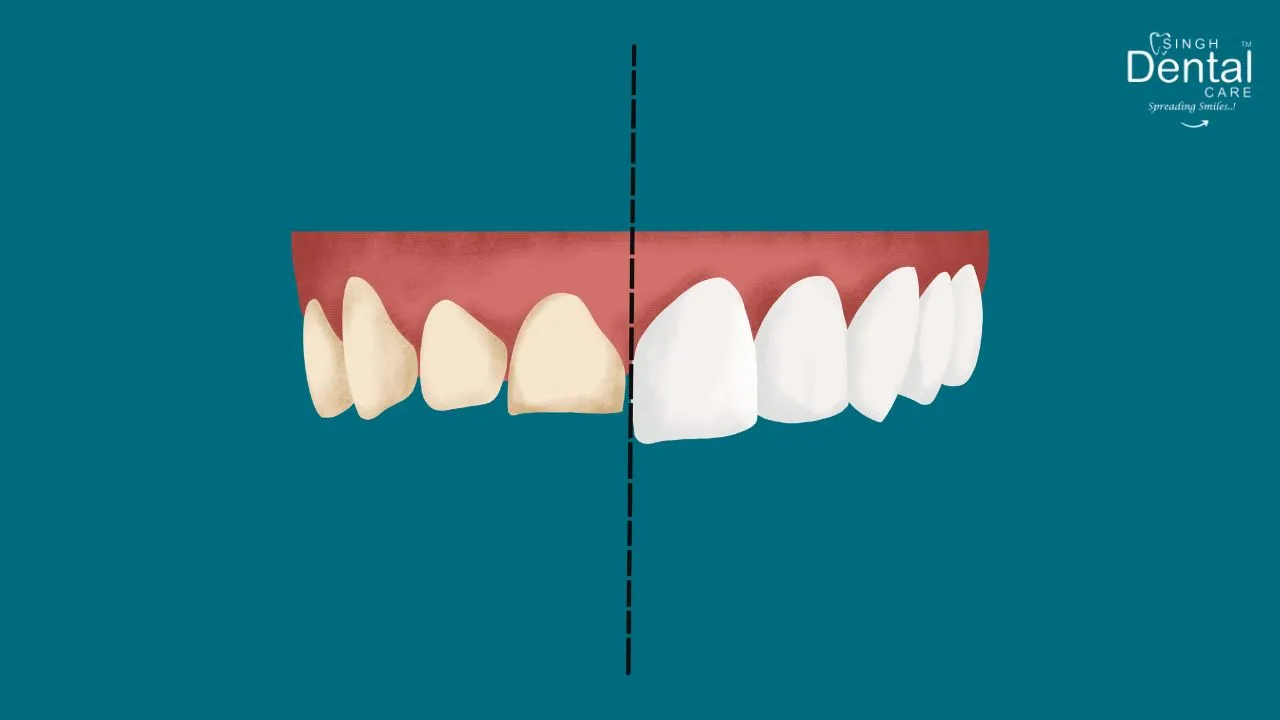
Dental veneers are thin, custom-made shells that are bonded to the front surface of teeth to improve their appearance. They are designed to enhance the color, shape, size and alignment of teeth, creating a natural and attractive smile.
Veneers are a popular cosmetic dental treatment for correcting stained, chipped, worn, uneven or slightly misaligned teeth without extensive dental procedures.
At Singh Dental Care, we create personalized veneers that blend seamlessly with your natural teeth, helping you achieve a beautiful, confident smile.
Why Might You Need Dental Veneers?
Discolored teeth that do not respond to whitening
Chipped or broken teeth
Worn-down teeth
Small gaps between teeth
Slightly crooked teeth
Teeth with surface defects or enamel wear
A desire for a complete smile makeover
Veneers offer a minimally invasive way to dramatically improve the appearance of your smile.
Signs That You May Be a Candidate for Veneers
Have healthy teeth and gums
Want to improve your smile cosmetically
Have sufficient natural tooth enamel
Do not have untreated tooth decay or gum disease
Have realistic expectations regarding treatment outcomes
Types of Dental Veneers
Porcelain Veneers :- Highly durable
Excellent stain resistance
Natural appearance and translucency
Long-lasting cosmetic results
Composite Veneers :- Made from tooth-colored composite resin
Usually completed in a single visit
More affordable than porcelain veneers
Easier to repair if damaged
No-Prep or Minimal-Prep Veneers :- Require little or no removal of tooth enamel
Suitable for selected cosmetic cases
Conservative treatment option
How Are Dental Veneers Placed?
Step 1: Consultation and Smile Assessment :- The dentist evaluates your smile, discusses your goals, and determines whether veneers are suitable for you.
Step 2: Treatment Planning :- The size, shape, color, and design of your new smile are planned to achieve a natural appearance.
Step 3: Tooth Preparation :- For traditional veneers, a very thin layer of enamel is gently removed from the front surface of the teeth to create space for the veneers.
Step 4: Impressions or Digital Scan :- Precise impressions or digital scans are taken to fabricate custom veneers.
Step 5: Temporary Veneers (If Required) :- Temporary veneers may be placed while the permanent veneers are being fabricated.
Step 6: Veneer Bonding :- The final veneers are carefully checked for fit, color and appearance before being permanently bonded using a strong dental adhesive.
Is Getting Veneers Painful?
The procedure is generally comfortable. Minimal tooth preparation is required, and local anesthesia may be used when necessary. Most patients experience little or no discomfort during treatment.
Benefits of Dental Veneers
Enhances Smile Appearance :- Improves the color, shape, and overall aesthetics of your teeth.
Natural-Looking Results :- Custom-designed to match your facial features and natural teeth.
Stain Resistant :- Porcelain veneers resist stains from tea, coffee, and tobacco better than natural enamel.
Minimally Invasive :- Requires less tooth reduction than many other restorative treatments.
Long-Lasting :- With proper care, veneers can provide beautiful results for many years.
Boosts Confidence :- A brighter, more attractive smile can improve self-confidence and social interactions.
Recovery and Aftercare
Avoid biting hard objects such as ice, pens or fingernails
Wear a night guard if you grind your teeth
Attend regular dental checkups
Limit habits that may damage the veneers, such as opening packages with your teeth
Maintain good oral hygiene
Possible Risks and Limitations
Temporary tooth sensitivity
Chipping or fracture if excessive force is applied
Need for replacement after many years
Color cannot be changed after placement
At Singh Dental Care, each and every factor is discussed with patient before treatment.
How Long Do Dental Veneers Last?
The lifespan of veneers depends on:
Type of veneer material
Oral hygiene habits
Teeth grinding habits
Diet and lifestyle
Regular dental maintenance
With proper care:-
Porcelain veneers often last 10–15 years or longer.
Composite veneers typically last 5–7 years, depending on maintenance.
11) FAQ
Q)Do veneers look natural?
A)Yes. Modern veneers are custom-made to match the color, shape and translucency of natural teeth, providing highly aesthetic results.
Q)Can veneers stain?
A)Porcelain veneers are highly resistant to stains, while composite veneers may stain over time if not properly maintained.
Q)Can I eat normally with veneers?
A)Yes. Once bonded, veneers function like natural teeth. However, avoid biting extremely hard objects.
Q)Do veneers require special care?
A)No. Regular brushing, flossing, and routine dental visits are usually sufficient to maintain veneers.
Q)Are veneers permanent?
A)Traditional porcelain veneers are considered a long-term treatment because a small amount of enamel is removed during preparation.
Q)Can veneers fix crooked teeth?
A)Veneers can improve the appearance of mildly crooked or uneven teeth. Significant alignment issues may require orthodontic treatment.
Dr. Bikramjeet Singh
BDS & Fellowship in ImplantologyChief Dental Surgeon & Implantologist • Singh Dental Care
This clinical condition overview has been authored and verified by dental specialists at Singh Dental Care to ensure evidence-based, safe, and accurate oral healthcare guidance.
Seek Professional Advice
Our specialists at Singh Dental Care are equipped with advanced technology to diagnose and treat veneers with precision.
Disclaimer: The information provided above is for educational purposes only and should not be considered as medical advice. Please consult with a qualified dental professional for diagnosis and treatment options.