Disease & Condition Directory
White Spot Lesions
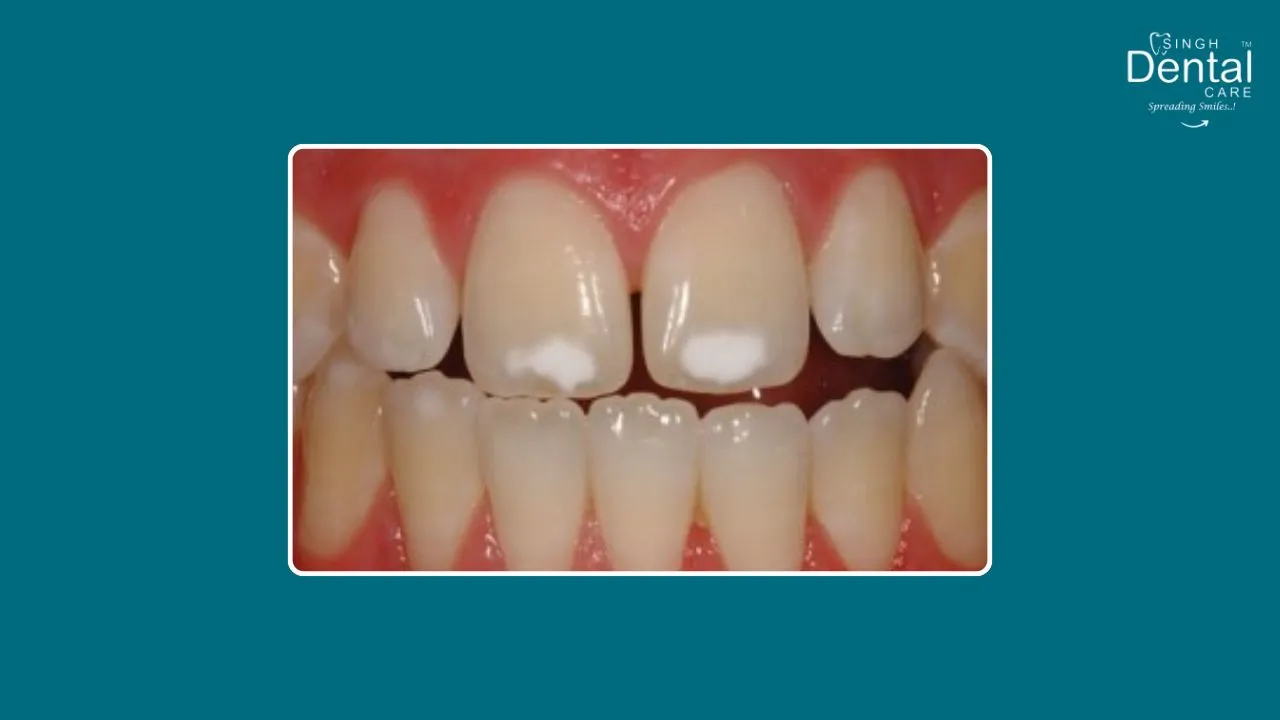
White Spot Lesions
Understanding White Spot Lesions
What Are White Spot Lesions?
White spot lesions are chalky white or opaque patches that appear on the surface of the teeth due to the loss of minerals from the enamel (demineralization). They are often the earliest visible sign of tooth decay before a cavity develops. White spot lesions may also occur due to excessive fluoride exposure, developmental conditions, or after orthodontic treatment with braces.
Early diagnosis is important because, in many cases, white spot lesions can be treated without drilling or fillings.
At Singh Dental Care, we identify the cause of white spot lesions and provide personalized treatment to restore your teeth's health and appearance.
Signs and Symptoms
Chalky white patches on the teeth
Opaque or dull areas on the enamel
White spots that become more visible after the teeth are dried
Mild tooth sensitivity in some cases
Rough enamel surface
Cosmetic concerns, especially on front teeth
Most white spot lesions are painless and are often noticed during routine dental examinations.
Causes of White Spot Lesions
Early Tooth Decay (Demineralization) :- Acids produced by bacteria remove minerals from the enamel, creating the first stage of dental decay.
Poor Oral Hygiene :- Inadequate brushing allows plaque to accumulate, increasing the risk of enamel demineralization.
Orthodontic Braces :- Plaque buildup around brackets and wires can lead to white spot formation if oral hygiene is not maintained.
Excessive Fluoride (Dental Fluorosis) :- High fluoride intake during tooth development may cause permanent white patches on teeth.
Enamel Developmental Defects :- Conditions such as enamel hypoplasia or hypomineralization can produce white areas.
Dry Mouth :- Reduced saliva flow decreases the natural protection against enamel demineralization.
Frequent Consumption of Sugary or Acidic Foods :- Repeated acid attacks weaken the enamel and promote mineral loss.
Risk Factors
Have poor oral hygiene
Wear braces or other orthodontic appliances
Frequently consume sugary snacks or soft drinks
Have a dry mouth
Have high cavity risk
Have excessive fluoride exposure during childhood
Skip regular dental checkups
Experience reduced saliva production due to medications or medical conditions
Types of White Spot Lesions
Early Carious White Spot Lesions :- Caused by enamel demineralization and considered the earliest stage of tooth decay.
Fluorosis-Related White Spots :- Develop due to excessive fluoride intake during tooth development.
Developmental White Spots :- Result from disturbances during enamel formation.
Post-Orthodontic White Spot Lesions :- Appear after braces because of plaque accumulation around brackets.
What Happens If White Spot Lesions Are Left Untreated?
Progress into cavities
Cause permanent enamel damage
Become more noticeable cosmetically
Increase tooth sensitivity
Require fillings or more extensive dental treatment
Early intervention often allows treatment without drilling.
Diagnosis at Singh Dental Care :-
Our dental team evaluates white spot lesions through:-
Clinical Examination :- Assessment of the location, size, and appearance of the white spots.
Caries Risk Assessment :- Evaluation of your oral hygiene, diet, fluoride exposure, and cavity risk.
Digital X-Rays :- Used when necessary to determine whether decay has progressed beneath the enamel.
Photographic Documentation :- Clinical photographs may be taken to monitor changes over time.
Enamel Evaluation :- Assessment to distinguish early decay from fluorosis or developmental enamel defects.
Treatment Options
Fluoride Therapy :- Professional fluoride applications help strengthen enamel and promote remineralization.
Remineralization Treatment :- Calcium and phosphate-based products may help restore lost minerals in early lesions.
Resin Infiltration (ICON Treatment) :- A minimally invasive procedure that masks white spot lesions and stops early decay progression without drilling.
Microabrasion :- A conservative cosmetic procedure that removes superficial enamel discoloration.
Teeth Whitening :- In selected cases, whitening may improve the overall appearance by blending the tooth color.
Composite Bonding or Veneers :- Recommended for severe or persistent cosmetic defects that cannot be managed conservatively.
Improved Oral Hygiene :- Personalized brushing, flossing, and dietary guidance help prevent further demineralization.
Prevention Tips
Brushing twice daily with fluoride toothpaste
Flossing every day
Limiting sugary foods and acidic beverages
Maintaining excellent oral hygiene during orthodontic treatment
Attending regular dental checkups
Using fluoride products as recommended by your dentist
Drinking plenty of water to support healthy saliva flow
FAQ
Q)Are white spot lesions cavities?
A)Not always. They are often the earliest stage of tooth decay and may be reversible if treated early.
Q)Can white spot lesions disappear?
A)Many early lesions can improve through remineralization or minimally invasive cosmetic treatments.
Q)Are white spots after braces common?
A)Yes. White spot lesions are a common complication of poor oral hygiene during orthodontic treatment.
Q)Is fluoride responsible for all white spots?
A)No. While excessive fluoride can cause fluorosis, many white spots are caused by early tooth decay or developmental enamel defects.
Q)Can white spot lesions be treated without drilling?
A)Yes. Many early lesions can be managed with fluoride therapy, remineralization, or resin infiltration without the need for drilling.
Q)Are white spot lesions harmful?
A)They are usually not painful, but if caused by early tooth decay, they may progress into cavities if left untreated.
Dr. Bikramjeet Singh
BDS & Fellowship in ImplantologyChief Dental Surgeon & Implantologist • Singh Dental Care
This clinical condition overview has been authored and verified by dental specialists at Singh Dental Care to ensure evidence-based, safe, and accurate oral healthcare guidance.
Seek Professional Advice
Our specialists at Singh Dental Care are equipped with advanced technology to diagnose and treat white spot lesions with precision.
Disclaimer: The information provided above is for educational purposes only and should not be considered as medical advice. Please consult with a qualified dental professional for diagnosis and treatment options.